

Let me guess how your night went. You found a spot that didn’t hurt, finally dozed off, and then rolled over in your sleep. Boom. That deep, grabbing ache in your shoulder, and now it’s 3 a.m. and you’re wide awake and a bit angry at your own arm.
Table of Contents
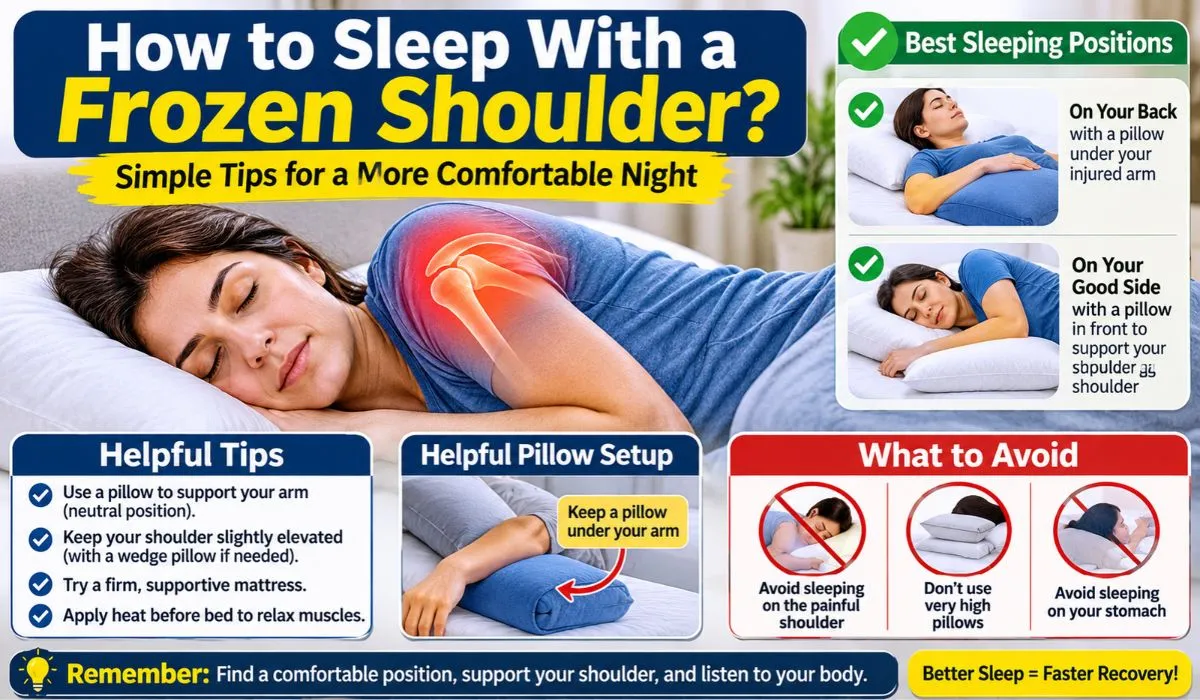
Almost everyone with a frozen shoulder goes through this. So here’s what tends to help most: sleep on your back, or on your good side, and keep a pillow tucked under or in front of the sore arm. It sounds almost too simple, but the pillow is doing a lot of work. It stops the arm from dropping or twisting while you’re out cold.
Why is night the worst? A frozen shoulder (adhesive capsulitis, if you want the doctor word) means the tissue around the joint has gotten thick and tight. During the day you keep moving, and that keeps things a little looser. Lying still for seven hours lets it stiffen up again. According to the NHS, it can take a year or even two to fully settle down, so it’s worth fixing your nights instead of just gritting your teeth.
On your back is the easiest one to try first. Slide a small pillow, or even a rolled-up towel, under the sore arm so the shoulder isn’t sinking backward into the mattress. A lot of people also like another pillow under the knees, which takes a bit of strain off everything above it. If you like sleeping on your side, that’s okay too, just stay on the good side. Hug a pillow to your chest and let the sore arm rest on top of it. Skip that pillow and the arm flops forward and tugs on the joint all night long.
Some nights are just rough, though. On those, try sleeping half-sitting up with a few pillows stacked behind you, or give the recliner a go. It feels a bit silly, honestly, but plenty of people sleep better that way for a few weeks until the worst pain calms down.
There are two things I’d skip. Don’t lie on the painful shoulder, even for a minute, because a minute turns into an hour. And try not to sleep with that arm stretched up above your head, which squeezes the joint for hours without you noticing.
A little wind-down helps too. Hold a heating pad on the shoulder, or stand in a warm shower, for ten or fifteen minutes before bed. Then do a few easy pendulum swings. Lean forward, let the sore arm hang, and sway it gently, like a loose rope. If it stings, stop. This is not the time to be a hero. The Cleveland Clinic also mentions that anti-inflammatory medicine can ease night pain, but run it by your doctor first, especially if you take other medication.
If you’re pregnant or just had a baby, you probably already sleep surrounded by pillows, so adding one more for the sore arm won’t feel like much of a change. Just check with your OB-GYN before taking any pain medicine, since not everything is safe during pregnancy.
And please don’t ignore it if things are getting worse. If the pain keeps climbing or you’re losing movement fast, see a doctor. A physical therapist can show you gentle exercises, and some people get a steroid injection to settle the pain. The American Academy of Orthopaedic Surgeons says most people do improve with time and proper care. So the good news is that this doesn’t last forever.
A Few Quick Questions
Why does frozen shoulder hurt more at night?
You’re lying still, so the joint stiffens, and your body weight can press on the tight tissue.
Can I sleep on my side with a frozen shoulder?
Yes, but only on the good side, with a pillow in front of you.
Heat or ice before bed?
Most people find heat better for stiffness. Ice is worth a try if the shoulder feels hot or swollen.
How long does the night pain last?
It’s different for everyone. It’s often worst early on and eases as the shoulder starts to thaw.
What’s the best pillow for a frozen shoulder?
A soft one for your head and a second one for the arm. A body pillow works nicely too.