

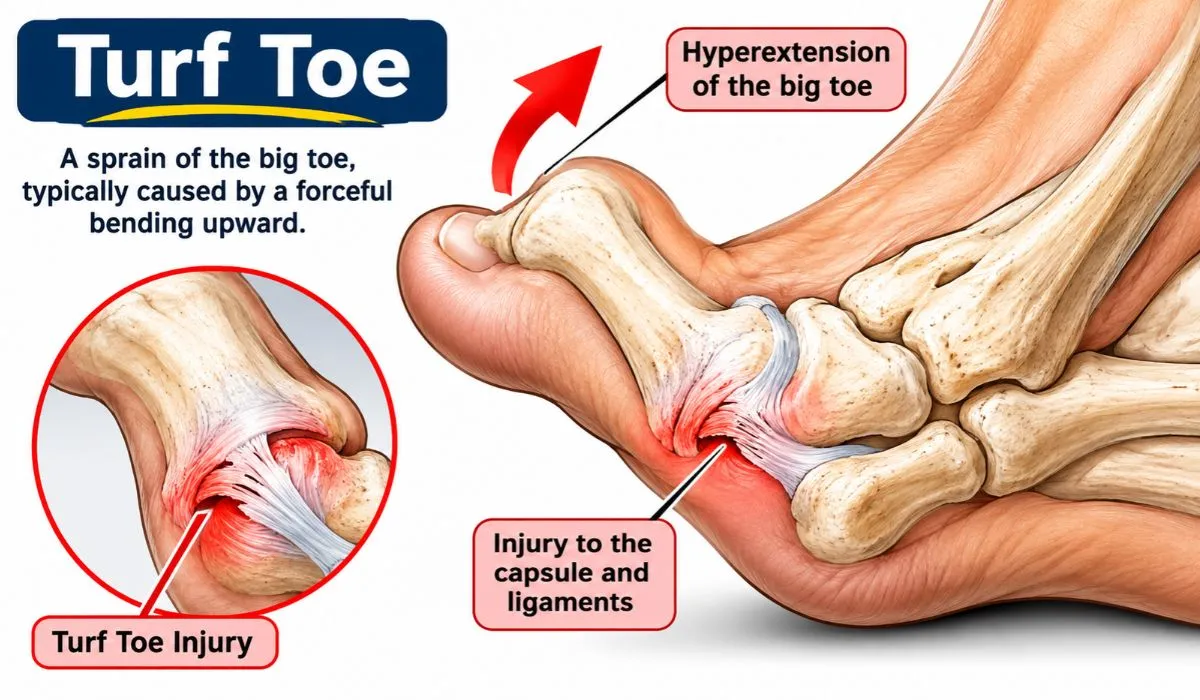
Turf toe is a sprain of the big toe joint. It happens when the toe bends upward too far, stretching or tearing the ligaments underneath. Most cases heal with rest, ice, and taping or bracing, but severe tears can take months and sometimes need surgery.
Table of Contents
If you’ve ever pushed off hard and felt your big toe suddenly protest, you may already know how much this injury can stop you in your tracks. Turf toe sounds like a minor scrape, but even NFL stars have missed weeks or months of games with it. Retired center Jason Kelce put it well on his podcast: the name may be silly, but the injury isn’t.
What Is Turf Toe?
Turf toe is also called a metatarsophalangeal (MTP) joint sprain. It happens when your toe stays planted while your heel lifts, forcing the big toe to hyperextend. That strains the soft tissues and ligaments that hold the joint steady. Your big toe is your balance point when you walk, run and push off, so when it’s hurt, almost everything gets harder.
The name dates back to the 1970s, when football moved onto hard artificial turf. Surfaces have improved since then, but turf toe hasn’t gone away. It can happen on grass, on a dance floor, or in a martial arts studio. Soft, flexible cleats and flimsy shoes can add to the risk, and Cleveland Clinic notes that even loose flip-flops may contribute over time.
Turf Toe Symptoms to Watch For
Pain at the base of the big toe is the classic sign. After a sudden injury you may feel or hear a “pop,” and the pain usually shows up right away. When the cause is repeated stress, like a dancer’s constant jumping, symptoms creep in slowly and get worse.
You might also notice swelling, bruising that spreads toward the top of the foot, stiffness, or a weak, loose feeling in the joint. Pushing off may hurt the most. In bad cases, you may not be able to put weight on the foot at all.
The Three Grades of Turf Toe
Doctors grade turf toe by how much damage there is, and the grade shapes your recovery.
A grade 1 sprain means the tissue is stretched but not torn. You’ll have mild swelling and tenderness, and you may be back in action within a week or so. Grade 2 is a partial tear, with more swelling, bruising and limits on activity. Expect roughly two to eight weeks, depending on the source and the athlete. Grade 3 is a complete tear, sometimes with a dislocated joint, and healing can take two to six months or longer. Surgery is most common here.
How Turf Toe Is Diagnosed
Your provider will press on the toe, check how well it moves and ask how the injury happened. An X-ray is usually the first test, mainly to rule out a fracture. If they suspect serious soft tissue damage, an MRI can confirm the grade.
Turf Toe Treatment and Recovery
The foundation is rest. Your provider may suggest a walking boot or crutches for a while. Elevating your foot and icing the toe for about 20 minutes at a time helps with swelling, and over-the-counter anti-inflammatory medicine can ease pain if your provider agrees.
Once the swelling settles, taping the big toe to its neighbor or using a brace limits motion and protects the joint. Physical therapy then helps restore range of motion and strength, with a focus on keeping the foot flat and not overextending the toe. Stiff-soled shoes or orthotics can add support when you return to sport.
Most people recover well. Rushing back is the big risk, because a toe that isn’t fully healed is likely to be injured again.
Tips and Common Mistakes
Don’t try to play through the pain. Skipping rest is the quickest way to turn a mild sprain into a long layoff. Choose supportive shoes that fit properly, and warm up before activity. Many people also skip physical therapy once the pain fades, which can leave lingering stiffness or weak push-off strength.
When to See a Doctor
See a provider if your toe is painful, swollen or bruised, even if the pain is mild. Go right away if you can’t put weight on the foot or the joint looks out of place. Left untreated, turf toe can cause long-term stiffness, arthritis or bone spurs.
Turf Toe FAQs
How long does turf toe take to heal?
Grade 1 often settles within a week, grade 2 within a few weeks, and grade 3 can take several months, longer after surgery.
Can turf toe heal on its own?
Mild cases usually do with rest, but a provider should confirm the severity.
Can you walk with turf toe?
Often yes in mild cases, though it may hurt. Severe cases can make walking very difficult.
Does turf toe only happen to athletes?
No. Dancers, people who wear unsupportive shoes, and anyone who jams their toe can get it.