

You swing your feet out of bed, stand up, and it feels like you stepped on a nail. If that sounds familiar, you’ve probably wondered about heel spur treatment. Here’s the short answer: most people feel better with rest, ice, stretching, supportive shoes, and inserts, and surgery is rarely needed.
Table of Contents
What a Heel Spur Really Is
A heel spur is a small bony growth under the heel bone, near where the plantar fascia attaches. The plantar fascia is the thick band running along the bottom of your foot. According to Cleveland Clinic, spurs affect about 15% of people, and many never know they have one.
Spurs build up slowly because your body reacts to long-term strain. Running, long hours on your feet, flat feet or high arches, extra weight, and worn-out shoes can all play a part.
Is It the Spur or Something Else?
Many people find this surprising. The spur often isn’t what hurts. Plantar fasciitis, which is irritation of that band under your foot, is usually the real troublemaker. Cleveland Clinic points out that heel pain blamed on spurs is typically caused by plantar fasciitis, which is why treatment aims at calming that irritation. A doctor may use an X-ray to see the spur. Ultrasound or MRI can help rule out a stress fracture or a tendon problem.
Heel Spur Treatment at Home
Start here. Most people begin with simple steps, and many feel real improvement within several weeks.
- Rest your heel. Cut back on running, jumping, and long stretches of standing for a while.
- Ice it. Use a cold pack for 15 to 20 minutes with a cloth in between, a few times a day.
- Stretch gently. Calf and plantar fascia stretches loosen the tight tissue pulling on your heel.
- Wear supportive shoes. Look for cushioning, arch support, and a firm heel. Skip walking barefoot on hard floors.
- Try inserts. Heel cups or over-the-counter orthotics take pressure off the sore spot.
Anti-inflammatory medicine like ibuprofen can ease pain too. Use it as directed, and check with your doctor if you have other health conditions.
When You Need More Than Home Care
If your heel still hurts after a few weeks, it’s time to see a foot specialist. They might suggest:
- Physical therapy. A therapist teaches stretches, strengthening, and ways to improve how you walk.
- Custom orthotics. These are fitted to your foot shape, which helps if you have flat feet or high arches.
- Night splints. They hold your foot in a gentle stretch while you sleep.
- Corticosteroid injections. A doctor may offer them for stubborn pain.
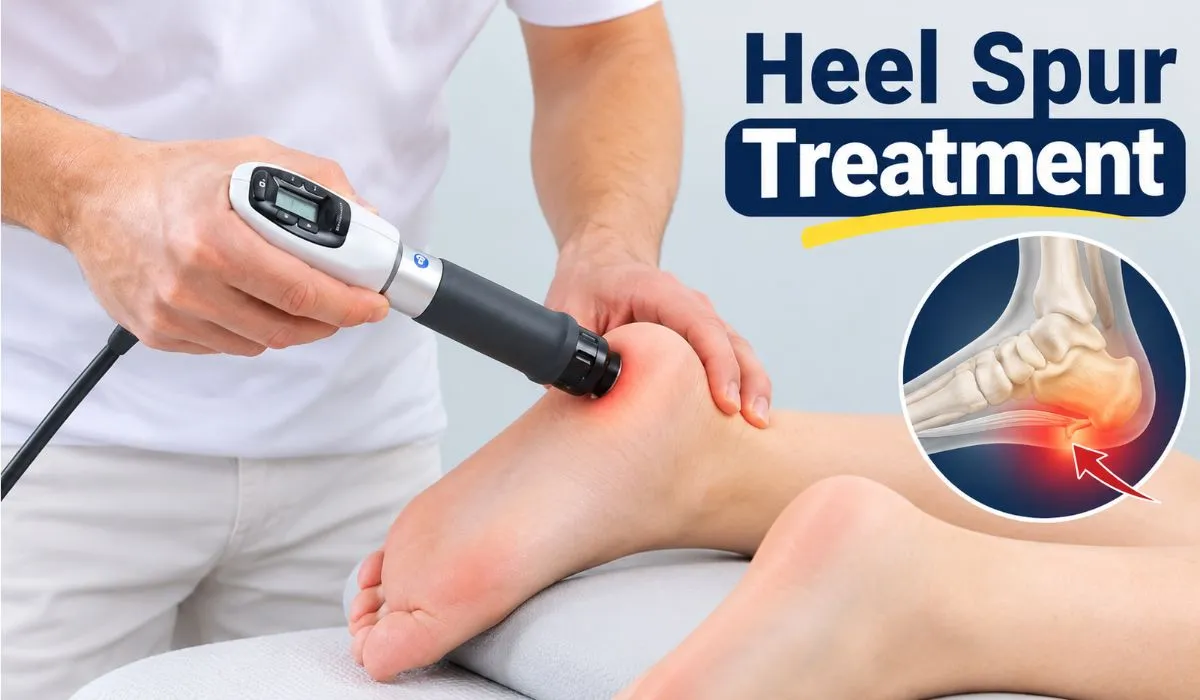
- Shockwave therapy. This non-surgical option uses sound waves to encourage healing in chronic cases.
Is Surgery Ever Needed?
Rarely. Surgery is usually considered only after six to twelve months of proper nonsurgical care without relief. Even then, the surgeon may release the plantar fascia rather than simply remove the spur, because removing it isn’t always what fixes the pain. Recovery generally takes several weeks.
Common Mistakes to Avoid
- Pushing through the pain and keeping up high-impact workouts
- Wearing flat, thin, worn-out shoes every day
- Stopping stretches the moment you feel better
- Assuming the spur is the cause without getting it checked
When to See a Doctor
Book a visit if the pain lasts more than a few weeks, keeps coming back, or makes walking hard. Get checked sooner for sudden severe pain after an injury, major swelling, or trouble putting weight on your foot.
FAQs
Can a heel spur go away on its own?
No. Once it forms, it stays unless it’s removed surgically. The good news is that the pain can still go away.
How long does heel spur treatment take?
Some people improve in a few weeks. Others need several months of steady care.
Do heel spurs always hurt?
No. Many cause no symptoms and are found by accident on an X-ray.
What’s the best shoe for a heel spur?
One with good arch support, cushioning, and a firm heel counter.