

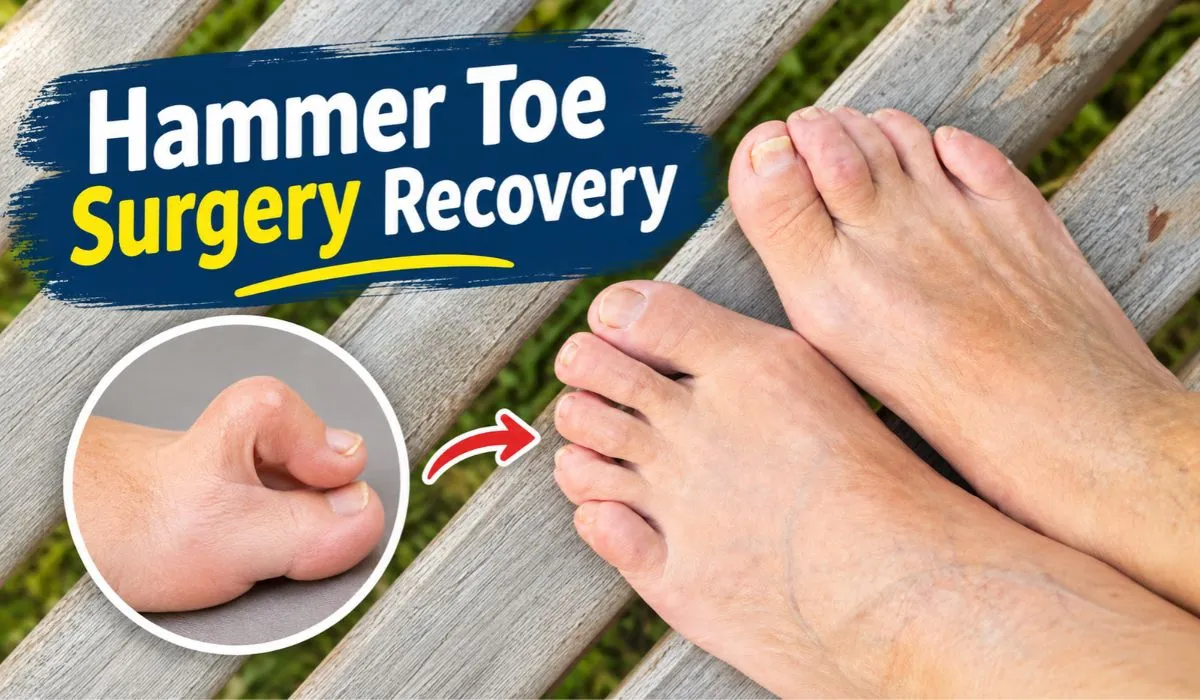
If you’ve got a surgery date on the calendar and your first question is “how long until I can get back to normal?”, here’s the short version of hammer toe surgery recovery. Most people are walking in a protective shoe right away, get their stitches out around week two, and see the pin (if they had one) come out somewhere between weeks three and six. Many are back to regular activity by about two months, even though swelling can linger quietly for several more. Let’s walk through each stage so nothing catches you off guard.
Table of Contents
Why Hammer Toe Surgery Recovery Looks Different for Everyone
Before we get into the weeks, a quick reality check: your recovery won’t be a carbon copy of your friend’s, or the timeline in a brochure. Hammer toe surgery straightens a curled toe, usually by releasing tight tissue, removing a small piece of bone at the bent joint, or both. The toe is then held in place with a small pin or screw while it heals. How involved your procedure was shapes everything that follows.
A few things can nudge your timeline one way or the other:
- Whether the surgeon worked on soft tissue only or also on the bone
- Whether a pin or a screw was used to hold the toe straight
- How many toes were corrected at the same time
- Your general health, circulation, and whether you smoke
- How physical your job is, and whether you can do it sitting down
The First Few Days: Rest, Elevate, Repeat
The first 48 to 72 hours are the least glamorous part of hammer toe surgery recovery, and also one of the most important. Your toe will be bandaged, and swelling and some throbbing are normal. Most people go home the same day in a stiff-soled surgical shoe or sandal.
Your main job is simple: keep your foot propped up above heart level as much as you can, and ice it in short stretches with a thin cloth between the ice and your skin. Take your pain medication as directed rather than waiting for the pain to build. Most of the swelling shows up right now, and the pain usually settles within a few days. Short, gentle walks around the house are fine, but think minutes, not marathons.
Weeks 1 to 2: Getting Comfortable in Your Surgical Shoe
By now the pain has usually eased a lot, and many people find they need little or no medication. You’ll still be in your protective shoe, keeping the bandage clean and dry, and slowly lengthening your walks as comfort allows.
Around the two-week mark you’ll typically have a check-up to get your stitches removed and have the toe looked at. If a pin is sticking out of the tip of the toe, expect to keep that area dry, because it’s a direct route for infection. Some surgeons also tape or splint the toe to keep it lined up properly while it settles.
Weeks 2 to 4: Swelling Starts to Calm Down
This is where recovery starts feeling like progress. You’ll probably be on your feet a bit more each day, and some people go back to desk work or seated jobs. A physically demanding job may need a longer break.
Swelling doesn’t vanish overnight, though. The toe may look puffy by the end of the day, and that’s completely normal. Once your surgeon gives the green light, gentle toe and scar massage can help the swelling go down and keep the incision area soft. Driving is a separate question. Plenty of people need four to six weeks before they’re ready, so check with your surgeon before getting behind the wheel.
Weeks 4 to 6: Pins Out, Shoes Back On
For many people this is the big turning point. If you had a pin, it’s usually removed in the clinic sometime between week three and week six, and most describe it as more odd than painful. Your surgeon may take an X-ray to confirm the bone is lining up well. If you had a screw instead, it normally stays in for good and doesn’t need to come out.
As the swelling fades, the toe begins to look like a toe again, and you’ll likely graduate from the surgical shoe into something roomy and supportive. Standing or walking for long stretches might still feel tiring until around the six-week mark.
Weeks 6 to 12: Getting Back to Your Normal Routine
By week six or so, most people feel the toe is stable and much less tender. Low-impact exercise like walking, cycling on a stationary bike, or Pilates often comes back first. Running and other high-impact activities usually wait until around eight weeks or later, depending on how things look at your follow-up. By week twelve, most toes are well healed and the major healing is done.
Months 3 to 12: The Long Tail
Here’s the part that surprises people. Even when your toe looks and feels great, a little swelling can hang around for several months, and in a smaller number of cases it can last up to a year. That doesn’t mean something has gone wrong. Tissues around the toe simply take their time to settle, and it rarely gets in the way of daily life.
What Can Slow Down Hammer Toe Surgery Recovery
A few habits and conditions tend to stretch out the timeline, so it helps to know them in advance:
- Smoking, which cuts down blood flow and slows healing
- Diabetes or circulation problems that aren’t well controlled
- Skipping elevation, which keeps swelling around longer
- Rushing back to high-impact activity before the bone is ready
- Missing follow-up visits, where small problems get caught early
Did You Know?
A few small things that don’t always make it into the standard handout:
- Walking a little each day, once you’re cleared, does more than keep you moving. It boosts circulation, which supports healing, and it helps keep other post-surgery nuisances like constipation at bay.
- Your toe might look a bit worse at week two or three than it did right after surgery. You’re up on your feet more by then, so fluid pools in the foot more easily. It’s a normal part of the process, not a setback.
- Pain medicine can upset your stomach. Taking it with food, or asking your doctor about an alternative, can make the first week much more comfortable.
When to Call Your Surgeon
Normal recovery means swelling, stiffness, and some redness that gradually improve. Call your surgeon or care team if you notice pain that’s getting worse instead of better, spreading redness, warmth, discharge, a fever, or a pin or dressing that has shifted. Catching these early is far easier than dealing with them later.
The Bottom Line
Hammer toe surgery recovery isn’t one long stretch of discomfort. It’s a series of fairly predictable stages, and each one gets easier than the last. Most people are surprised by how quickly the early pain fades and how normal things feel by around the two-month mark. Elevate when you’re told to, wear the shoe you’re given, and show up to your follow-ups. If you’re still deciding on surgery, or you want a timeline tailored to your own foot, a consultation with a foot and ankle specialist is the best next step.