

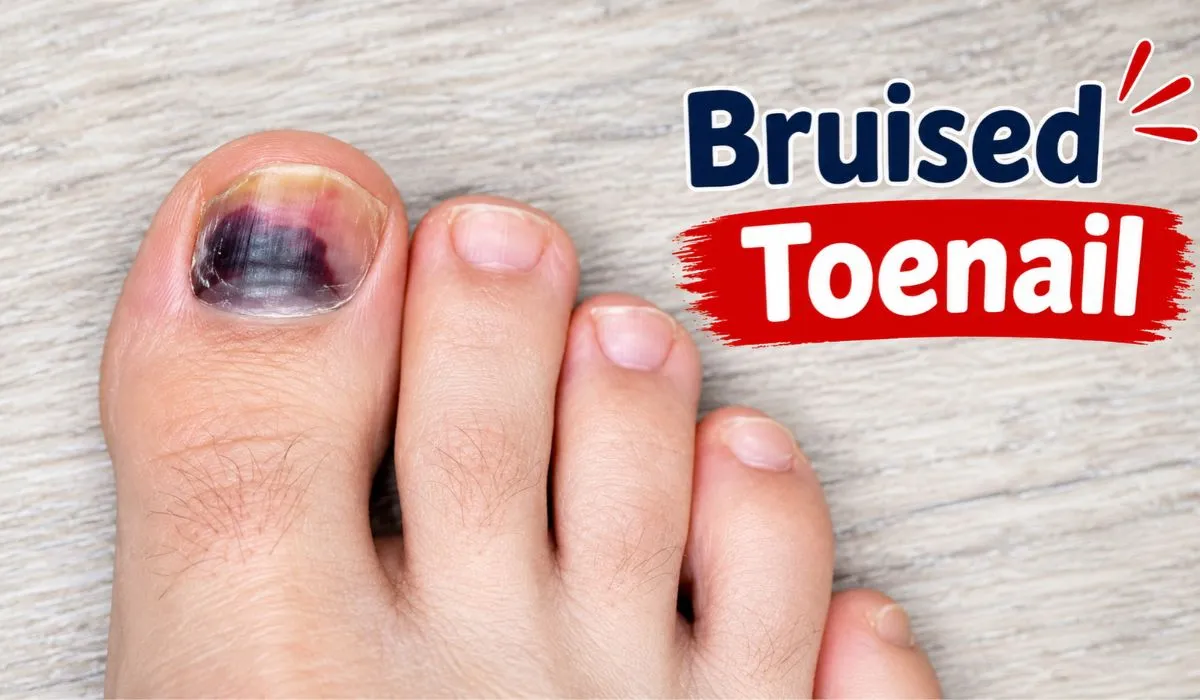
A bruised toenail, also called a subungual hematoma, develops when blood collects beneath the nail after an injury to the nail bed. Just like a bruise on the skin, the damaged blood vessels leak, but because the blood has nowhere to go, it becomes trapped under the toenail. This commonly happens when something falls on the toe, when the toe is stubbed, or when it is repeatedly pressed against the front of a shoe. A bruised toenail may look alarming, but most minor cases improve as the nail grows out.
Table of Contents
The most noticeable symptom is discoloration. The nail may look red, purplish, brown, or black, and the mark can range from a small dark spot to a large area under the whole nail. Throbbing pain is also common, particularly when pressure builds beneath the nail. The nail bed may feel tender when touched or when wearing shoes. In some cases, part or all of the nail loosens from the nail bed, or the nail is cut or torn. Severe pain, a large bruise, or discharge from the nail may signal a more serious injury or infection.
Direct force is a common cause of a bruised toenail. Dropping a heavy object on the toe, stubbing it, or kicking a ball can all cause bleeding beneath the nail. Repetitive stress can also create a bruise, especially when shoes fit poorly or the toes repeatedly strike the front of the footwear during running or hiking. Sports and activities such as long-distance running, soccer, and dancing can increase the risk.
Other factors can make a bruised toenail more likely. Sandals or thongs that offer little protection, ill-fitting shoes, and long toenails that hit the front of the shoe can all contribute. A bleeding or clotting disorder, or nerve damage such as diabetic neuropathy that changes how you feel pain, can also raise the risk.
If less than half of your nail is discolored and it isn’t causing pain, you may be able to manage it at home. The RICE approach is a good starting point:
- Rest – give your toe a break from activity where possible
- Ice – apply ice to reduce swelling and pain
- Compression – gentle pressure can limit how much blood pools under the nail
- Elevation – raise your foot to ease swelling
Over-the-counter pain relief can help if the toe is sore. After an injury, the nail bed can take around seven to 10 days to heal. The nail may fall off on its own or simply grow out over time, but do not pull it off. If the nail is lost, it can take up to 12 months to grow back completely.
Toe pain can disrupt your daily activities. If you have any concerns about a bruised toenail, contact one of our podiatrists. Our doctors can provide the care you need to keep you pain-free and on your feet.
What Causes a Bruised Toenail?
Most bruised toenails are caused by trauma or repeated pressure on the nail. The most common causes include:
- Dropping something heavy on the toe
- Stubbing the toe
- Kicking a ball or other sports injury
- Wearing shoes that are too tight or poorly fitted
- Repetitive strain from running or hiking
- Untrimmed toenails that hit the front of the shoe
- Wearing unprotective footwear such as thongs or sandals
When to See a Podiatrist
Not every bruised toenail should be managed at home. See a podiatrist if:
- The bruise is large or painful
- Your nail has been torn or cut
- The nail is raised, loose, or separating from the nail bed
- There is discharge coming from the nail
- You suspect a broken toe or a cut that needs stitches
- You have neuropathy, peripheral artery disease, diabetes, or another condition that affects healing and circulation
It’s important to have a bruised toenail checked if you’re concerned. Untreated nail bed damage can lead to infection or permanent damage where the nail doesn’t grow back properly. It’s also worth getting a blackened toenail examined if you’re unsure it came from an injury, since other causes include fungal infection, diabetes, or, rarely, melanoma.
Diagnosis
In many cases, the cause is obvious from the injury. A podiatrist will examine the toe and nail to determine whether the discoloration is from trauma or another condition. If a fracture is suspected, an X-ray may be recommended. Your medical history and any recent injuries will be taken into consideration for a proper diagnosis.
Treatment
Treatment for a bruised toenail often focuses on relieving pressure under the nail to ease pain and help the blood drain. This may involve making a small opening in the nail. Never try to drill a hole in your nail yourself, as this could cause infection or damage to the nail bed. If the damage is severe or the nail has separated from the toe, your podiatrist may decide to remove it, and antibiotics may be prescribed if there are signs or a risk of infection.
Prevention Tips
- Wear well-fitting shoes with enough room for your toes
- Keep your toenails trimmed
- Choose protective footwear for sports and heavy-duty tasks
- Avoid walking barefoot or in unprotective sandals where objects could fall on your feet
Toe injuries can have long-term effects if they aren’t treated properly. If you have a bruised toenail, we suggest consulting a podiatrist for effective relief and treatment solutions.