
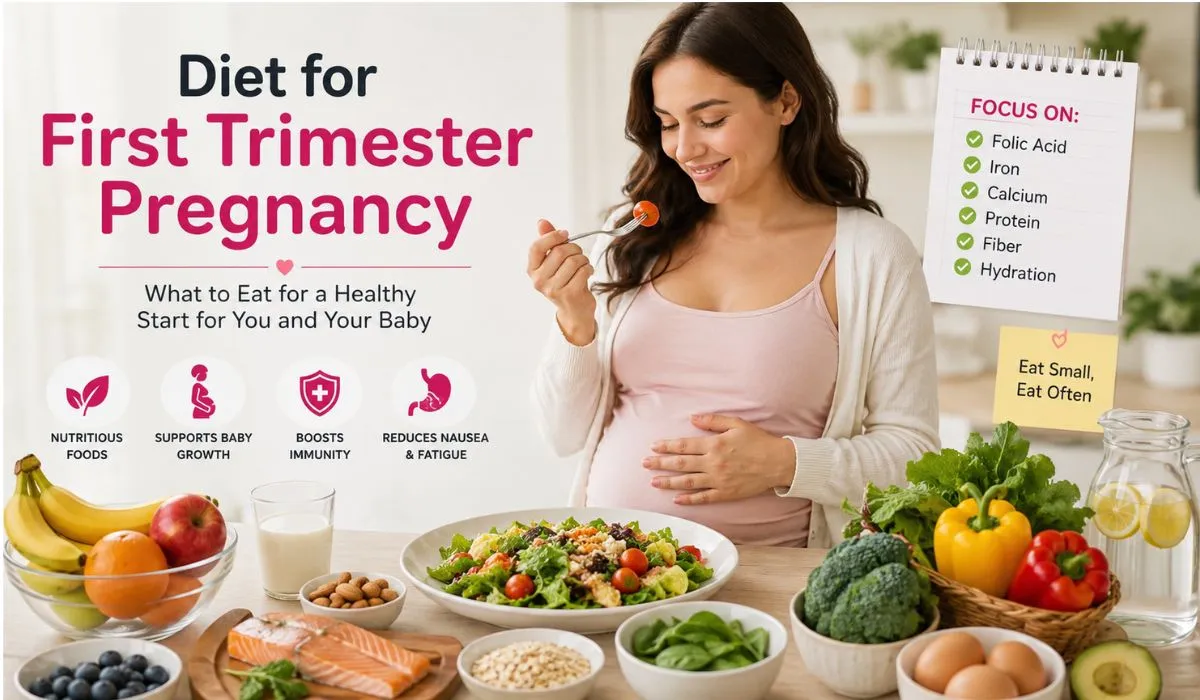
If you’re in your first trimester and wondering what you should actually be eating, here’s the honest, direct answer: focus on folic acid, protein, iron, and staying hydrated, and don’t stress too much beyond that. Your baby’s earliest and most critical development is happening right now, but so is the nausea, the food aversions, and the general feeling that eating “properly” might be too much to ask. That’s okay. You don’t need a perfect diet this trimester — you need a manageable one.
There’s something a little ironic about the first trimester. It’s the window when your baby’s brain, spinal cord, and heart are all taking shape — arguably the most important nutritional stretch of the whole pregnancy — and it’s also, for a lot of women, the point where food feels the least appealing. If you’ve found yourself standing in front of the fridge unable to face a single thing in it, you’re not doing pregnancy wrong. You’re just going through what most people go through.
Why This Stretch Matters So Much
The reason doctors talk so much about nutrition in these early weeks comes down to timing. The neural tube — which eventually becomes your baby’s brain and spinal cord — forms in the first month, often before many women even know they’re pregnant. According to the CDC, getting enough folic acid during this window meaningfully lowers the risk of neural tube defects. At the same time, your own body is quietly building a placenta, expanding its blood volume, and recalibrating its hormones, all of which take more nutritional support than usual — even if your appetite hasn’t gotten the memo.
The Few Things Worth Actually Prioritizing
You don’t need to overhaul your entire diet overnight. If you can just keep a few things in mind, you’re covering the essentials.
Folic acid matters most. Health experts generally recommend around 400–600 mcg a day, which you can get from leafy greens, fortified cereal, lentils, and citrus fruits — plus a prenatal vitamin to fill in the gaps on days when eating well just isn’t happening. Folic acid benefits go beyond neural tube protection too; it plays a role in healthy cell growth throughout the whole pregnancy.
Protein is what’s building your baby’s tissue and supporting your own expanding blood supply. If meat suddenly feels unbearable, which happens to a lot of women in early pregnancy, eggs, Greek yogurt, beans, and tofu are gentler ways to get there.
Iron becomes more important as your blood volume climbs. It’s worth knowing that pairing iron-rich foods like spinach or lentils with a bit of vitamin C — a squeeze of lemon, a few orange slices — actually helps your body absorb it better.
DHA, an omega-3 fat, supports your baby’s developing brain. Salmon, walnuts, and chia seeds are good sources, and a DHA supplement is a reasonable substitute if fish isn’t something you can stomach right now.
And then there’s water, which people underestimate. Staying hydrated genuinely helps with both nausea and fatigue, and sipping steadily through the day tends to sit better than trying to down a big glass all at once.
When Nausea Makes All of This Feel Impossible
This is the part most nutrition advice skips over, and it’s probably the part you actually need. If the idea of a balanced plate makes your stomach turn, you haven’t failed at anything — this is just what the first trimester can be like for a lot of women. Smaller, more frequent meals tend to go down easier than three big ones. On the hardest days, plain foods like crackers, toast, rice, or bananas are completely fine as your main source of calories. Cold or room-temperature meals are often easier to handle than hot ones, since strong smells are a common nausea trigger. And ginger — whether as tea, candy, or capsules — actually has real evidence behind it for easing morning sickness.
On the rough days, the goal isn’t a picture-perfect meal. It’s just getting enough in to keep you going, and trusting that your prenatal vitamin is quietly covering some of what you’re missing.
A Couple of Things Worth Avoiding
Skipping meals entirely because nothing sounds good can leave you running on empty and can actually make nausea worse, so it’s worth trying to eat something small even when you’re not hungry. It also helps to remember that prenatal vitamins are meant to fill gaps, not replace real food altogether. And a few foods are worth steering clear of for now — high-mercury fish like swordfish or king mackerel, unpasteurized dairy, and undercooked meat are all flagged as risks in ACOG’s pregnancy nutrition guidelines.
A Few Small Things That Help
Keeping easy snacks like nuts, crackers, or fruit within arm’s reach makes a real difference for sudden hunger or nausea. If mornings hit you the hardest, try eating something small before you even get out of bed. And if you find yourself eating the same three “safe foods” on repeat for weeks, that’s fine — variety has a way of coming back once the second trimester rolls around.
Questions You Might Be Sitting With
Is it normal to lose a little weight in the first trimester?
Yes, a small amount of weight loss from nausea is common and usually not a cause for concern. Just let your doctor know if it continues or if you’re struggling to keep fluids down.
Do I need to start eating for two already?
Not yet. Most women don’t need extra calories until the second trimester — right now it’s really about the quality of what you’re eating, not the quantity.
Can I still have my coffee?
Most guidelines allow up to about 200 mg of caffeine a day, roughly one 12-ounce cup, though it’s worth checking with your provider about what’s right for you.
What if my prenatal vitamin makes me feel worse?
Try taking it with food or at night, or ask your doctor about switching to a gummy or a lower-dose option — some formulations are just easier on the stomach than others.
Do cravings mean I’m missing a nutrient?
Usually not — most cravings and aversions are hormonal. That said, a strong craving for something like ice, known as pica, is worth mentioning to your doctor, since it can sometimes point to an iron deficiency.
 Emma Gill