
A healthy first trimester diet focuses on folate-rich foods, lean protein, iron, and small, frequent meals that go easy on a queasy stomach. These early weeks matter more than the scale might suggest — your baby’s neural tube, heart, and major organs are forming fast, often before you even get a positive test. So while you don’t need to “eat for two” yet, what you eat now carries outsized weight.
Table of Contents
Why the First Trimester Is Nutritionally Different
The first 12 weeks are a building phase, not a growing phase. Your baby isn’t gaining much size yet, but they’re laying down the architecture — brain, spinal cord, heart, and limbs all start forming in this window. That’s why nutrients like folic acid and iodine matter so much earlier than most people expect.
At the same time, this is often when nausea, food aversions, and exhaustion are at their worst. So the real challenge of a first trimester diet isn’t just “eat the right things” — it’s figuring out how to get those nutrients in when even the smell of scrambled eggs can send you running for the bathroom.
The Nutrients That Matter Most Right Now
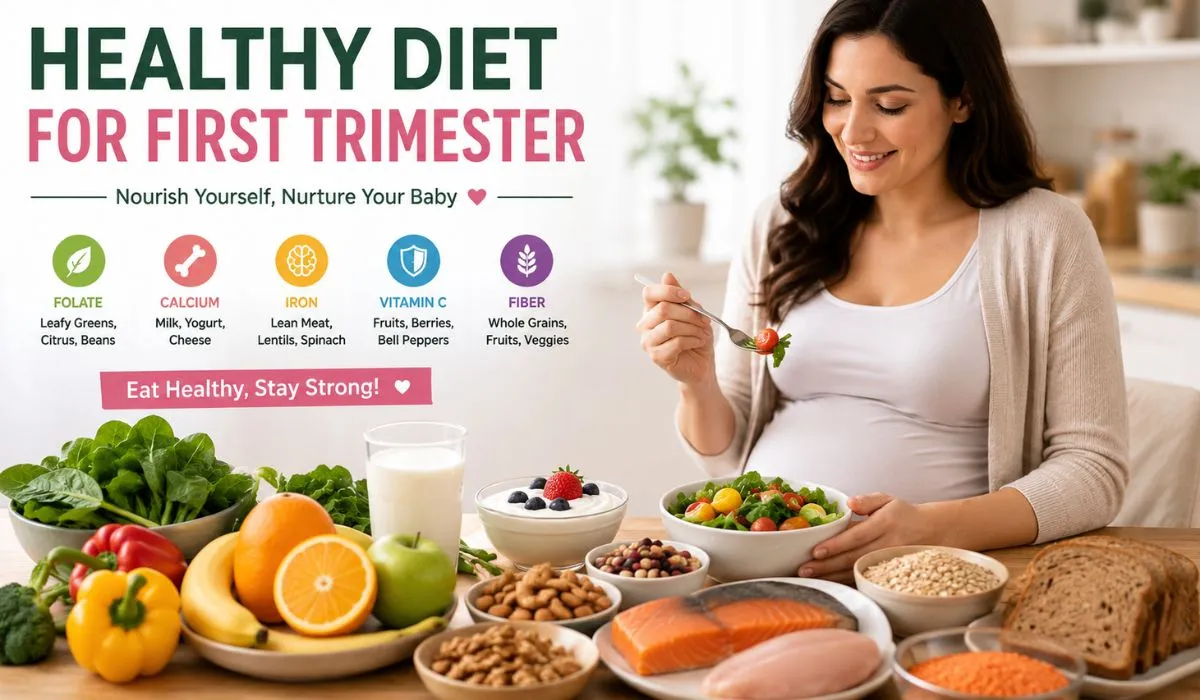
Folic acid is the headline nutrient of early pregnancy, and for good reason — it’s directly linked to preventing neural tube defects. The CDC recommends at least 400 mcg daily, and most prenatal vitamins are formulated with this in mind. Leafy greens, lentils, and fortified cereals help round out your intake alongside a supplement.
Iron comes next. Your blood volume starts expanding early on, and low iron in the first trimester is tied to fatigue that goes well beyond normal pregnancy tiredness. Lean red meat, beans, and spinach are solid sources, and pairing them with vitamin C — think citrus or bell peppers — helps your body absorb the iron more efficiently.
DHA, an omega-3 fatty acid, supports early brain and eye development. Fatty fish like salmon (low-mercury and pregnancy-safe) is the most direct source, though many women lean on a DHA supplement if fish isn’t appealing during this queasy stretch. Choline, often overlooked, works alongside folate for brain development and shows up in eggs and lean meats.
Calcium and vitamin D round things out, supporting bone development that will really ramp up later in pregnancy but benefits from an early start.
Making It Work When Nausea Takes Over
This is where theory meets reality. If the idea of a big, balanced meal makes you gag, you’re not doing anything wrong — you’re just pregnant. Smaller, more frequent meals tend to sit better than three large ones. Bland, carb-based foods like crackers, toast, and rice are often easier to tolerate and can be a legitimate bridge until nausea eases, usually by week 12–14.
Ginger tea or ginger candies are a low-risk way to take the edge off morning sickness. Cold foods sometimes go down easier than hot ones, since they tend to have less smell. And if all you can manage some days is a smoothie with spinach, yogurt, and fruit, that’s still doing real nutritional work — don’t let guilt over an imperfect day undo the good ones.
Common Mistakes to Avoid
A lot of the missteps in early pregnancy come from good intentions taken too far. Skipping meals because nothing sounds appetizing can backfire, since blood sugar dips make nausea worse, not better. Relying on prenatal vitamins as a total substitute for food is another common one — supplements fill gaps, they don’t replace the fiber, protein, and calories that whole foods provide. And it’s worth steering clear of high-mercury fish (swordfish, king mackerel), unpasteurized dairy, and raw or undercooked meat and eggs, since these carry specific risks in pregnancy that health experts consistently flag.
FAQ
Do I need to eat more calories in the first trimester?
Not really. Most women don’t need extra calories until the second trimester — the first trimester is more about nutrient quality than quantity
What if I can’t keep anything down?
Small sips of fluids and bland foods like crackers are a good starting point. If vomiting is severe or persistent, it’s worth talking to your provider about hyperemesis gravidarum.
Is it safe to take a prenatal vitamin along with a regular diet?
Yes — prenatal vitamins are designed to complement food, not replace it, and most OBs recommend starting one as soon as you’re trying to conceive or find out you’re pregnant.
Can I still have caffeine?
Most guidelines, including ACOG’s, suggest keeping caffeine under 200 mg a day during pregnancy — roughly one 12-oz cup of coffee.
What foods should I avoid completely?
Raw fish, unpasteurized cheese, deli meat that hasn’t been reheated, and high-mercury fish are the main ones to steer clear of throughout pregnancy, not just the first trimester.
 Emma Gill