
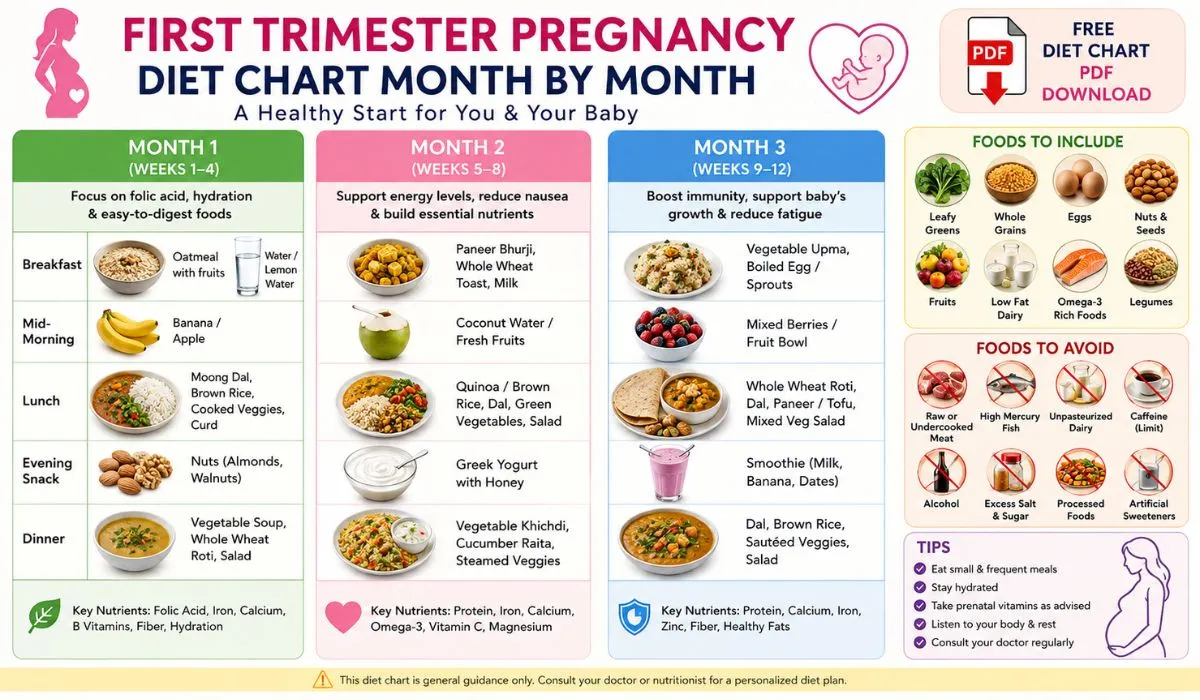
You just found out you’re pregnant, and somewhere between the excitement and the panic, you’re standing in front of your fridge wondering what on earth you’re supposed to eat now. Fair question. The honest answer is that your first three months really come down to small, steady meals with enough folic acid, iron, protein, and water in them — even on the days when just the thought of food makes you queasy. Below is a simple, month-by-month way to think about it, one you can screenshot, print, or turn into a PDF and stick on your fridge for the weeks you’re too tired to think straight.
Nobody really warns you how disorienting this stretch of pregnancy is. You feel completely normal one week, and the next you can’t walk into your own kitchen without gagging. So rather than handing you a strict meal plan you’ll feel guilty about breaking, think of this as more of a gentle companion — something to lean on depending on how your body’s actually doing that day, not how it’s “supposed” to be doing.
Table of Contents
Why this matters so much right now
Here’s the thing that makes these twelve weeks so important: your baby’s neural tube, heart, and major organs are forming quietly in the background, often before you even feel pregnant. That’s exactly why the CDC and ACOG keep pushing folic acid and iron so early on. It’s not about eating perfectly — it’s about giving your baby’s development a solid foundation while your own body is going through an enormous shift. So if you’re feeling rough, know that even the small things you manage to eat are doing real work.
Month 1 (weeks 1–4): mostly about folic acid
You might not even have a positive test yet, but this is when folic acid is doing its most important job — helping prevent neural tube defects. Try to lean toward leafy greens like spinach and kale, lentils and beans, citrus fruit, and fortified cereal when you can stomach them. And if your doctor’s recommended a prenatal vitamin with 400–800 mcg of folic acid, this is the month to start getting into the habit, even if it feels early.
Water matters here too, though it doesn’t have to be complicated — just sip it throughout the day instead of trying to chug a big glass at once, especially once the nausea starts sneaking in.
Month 2 (weeks 5–8): honestly, just survive it
This is usually when morning sickness peaks, so let’s be real — “eating well” this month might just mean eating whatever actually stays down. That’s genuinely enough. A lot of women swear by a few dry crackers or plain toast before they even sit up in bed. Ginger tea or ginger candies can take the edge off. And eating small amounts every couple of hours tends to work so much better than forcing three full meals a day. If smells are setting you off, go bland and room-temperature. Bananas and boiled potatoes are often the easiest things to keep down when nothing else sounds appealing.
Please don’t stress about having a perfect diet this month. Just eating something, consistently, in small bites, is the win here.
Month 3 (weeks 9–12): starting to feel like yourself again
For a lot of women, this is when the fog starts lifting a little, and it’s a good time to bring protein and iron back into your meals — your body needs both as your blood volume climbs. Eggs, chicken, or plant-based options like tofu and chickpeas are an easy place to start. When you’re eating iron-rich foods like spinach, lentils, or lean red meat, pairing them with something high in vitamin C helps your body actually absorb the iron. Dairy or a fortified plant milk covers your calcium, nuts and seeds bring in healthy fats, and something like salmon or walnuts gives you the DHA that supports your baby’s early brain development.
| Month | What to focus on | Foods that make it easy |
|---|---|---|
| Month 1 | Folic acid | Leafy greens, lentils, citrus, fortified cereal |
| Month 2 | Hydration & nausea relief | Crackers, ginger tea, bananas, small frequent meals |
| Month 3 | Protein & iron | Eggs, lentils, spinach, tofu, DHA-rich foods |
A few things worth watching out for
It’s so tempting to just skip a meal entirely when nothing sounds good, but tiny, frequent bites almost always work better than forcing yourself to sit down for a full plate. If a “healthy” food is making you sick, don’t push through it out of guilt — swap it for something gentler that still gives you similar nutrients. And if water isn’t appealing, that’s okay too; infused water or a mild herbal tea can be an easier way to get fluids in. One more thing — always check with your doctor before starting any new supplement, even the ones that seem completely harmless.
Making this actually work for you
Print this out, or save it as a PDF, so you’re not relying on memory during a week when even basic thinking feels hard. Stick it somewhere you’ll actually see it — your fridge, your phone’s lock screen, wherever. And try to hold onto this: flexibility matters more than perfection right now. Your body is already doing an enormous amount of work. You don’t have to get every meal “right” for this to be going well.
Questions you might still have
Is it normal to lose weight in the first trimester?
Yes, and it’s usually nothing to worry about — it’s a common side effect of nausea. Focus on staying hydrated and eating what you can manage, and mention it to your doctor if it carries on into the second trimester.
Do I still need a prenatal vitamin if I’m already eating well?
Most doctors will still say yes, simply because it’s really hard to get enough folic acid and iron from food alone this early on.
What foods should I steer clear of in the first trimester?
Generally, it’s best to avoid raw fish, unpasteurized dairy, deli meats, high-mercury fish, and too much caffeine.
What if my nausea is really severe (hyperemesis)?
This chart is meant to be a general guide, not a substitute for care. If you genuinely can’t keep food or fluids down, please reach out to your doctor — you may need some extra support to get through it safely.
 Emma Gill