
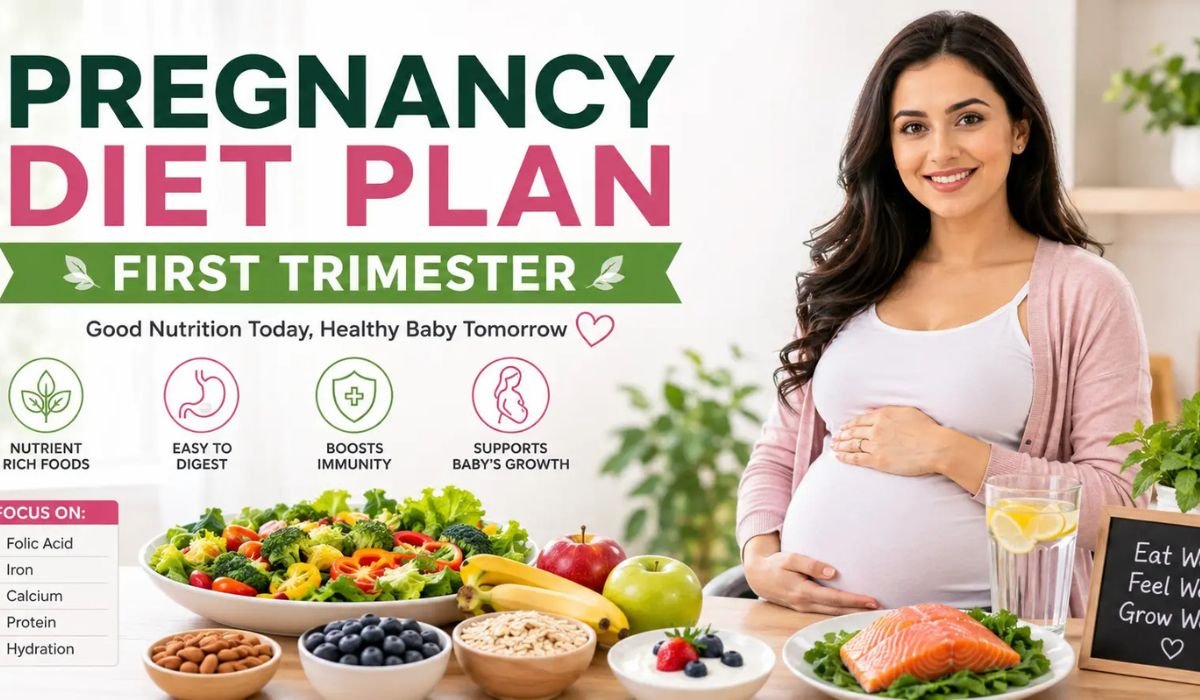
Let’s be honest — the moment you see those two lines, someone hands you a list of “must-eat” foods, and it can feel completely overwhelming, especially when just the smell of chicken makes you want to lie down. So here’s the real version: focus on folic acid, iron, and protein where you can, eat small amounts often, and don’t feel guilty on the days when saltines and ginger tea are the whole menu. This is the window when your baby’s brain, spine, and major organs are taking shape, so food does matter — but “perfect” was never realistic, and it isn’t the goal here either.
If you just found out you’re pregnant, take a breath first. You don’t need a flawless diet. You need something that works with the body you actually have this week, not the one in the meal-plan photos.
Table of Contents
Why Eating Well Feels So Hard Right Now
Here’s the frustrating part nobody warns you about: weeks 1 through 12 are exactly when your baby’s neural tube is developing, which is why folic acid matters so much this early — often before you even feel pregnant. And that’s the exact same window when nausea, food aversions, and a tiredness you’ve never felt before tend to hit hardest. Your nutrition needs peak right when your ability to eat normally kind of falls apart.
So drop the idea of three neat, balanced meals a day. Think smaller and more frequent instead — a few good bites, several times over. That will get you further than one big meal you can’t finish, or worse, one you can’t keep down.
What Your Body Actually Needs Right Now
Folic acid matters more than anything else this trimester. The CDC recommends 400–800 mcg a day for anyone who could become pregnant, ideally starting before conception. Leafy greens, fortified cereal, lentils, and citrus all help — but most doctors still recommend a prenatal vitamin, honestly, because hitting that number through food alone during a queasy week is genuinely tough.
Iron deserves more credit than it gets. Your blood volume is expanding fast, and low iron early on can leave you with a fatigue that feels different from just “tired” — more like your legs are made of sand. Lean red meat, beans, spinach, and iron-fortified grains help, and pairing them with a little vitamin C — orange slices, bell pepper strips — helps your body actually absorb it.
Protein is quietly doing a lot of the heavy lifting for your baby’s tissue growth, right from the start. The good news? Most protein sources are gentle on a rough stomach — eggs, Greek yogurt, tofu, chicken, and lentils are mild enough to handle even on your worst days.
DHA, an omega-3, supports your baby’s early brain development. Low-mercury fish like salmon, walnuts, and algae-based supplements are worth reaching for, especially if fish is the last thing you want to look at right now (it usually is).
Calcium and vitamin D are still worth a mention, even though bone development really picks up later on. Dairy, fortified plant milk, and a bit of safe sun exposure usually cover most women just fine at this stage.
What a Real Day Might Actually Look Like
This isn’t a strict meal plan — think of it more like a loose rhythm you can bend around however you’re feeling:
- Morning: A few dry crackers before your feet even hit the floor, then eggs and toast once your stomach feels like it can trust you again
- Mid-morning: Greek yogurt with berries, or just a small handful of almonds if that’s genuinely all you can manage
- Lunch: A small bowl of lentil soup with a slice of whole-grain bread
- Afternoon: An orange, or a smoothie with spinach, banana, and yogurt blended together
- Dinner: Grilled chicken or baked salmon with rice and steamed vegetables
- Evening: A glass of fortified milk or a small bowl of oatmeal
Some days you’ll get through most of that. Other days, toast and ginger tea will be the entire story — and that still counts. You’re not failing.
Foods Worth Steering Clear Of
Health experts recommend skipping raw or undercooked meat and eggs, unpasteurized dairy, high-mercury fish like swordfish and king mackerel, and alcohol altogether. Keep caffeine under about 200 mg a day (roughly one 12-ounce coffee), per ACOG’s guidance. Deli meats and soft cheeses are worth holding off on too, unless they’re clearly pasteurized or heated all the way through.
Mistakes Almost Every First-Time Mom Makes
The big one? Trying to “eat perfectly,” then feeling like you’ve failed the second nausea wrecks the plan. Let that expectation go now — seriously, it’ll save you a lot of guilt.
Another common one is skipping meals entirely because nothing sounds appealing, which usually makes the nausea worse, not better — an empty stomach tends to feel rougher than a mildly full one. And a lot of women quietly stop taking their prenatal vitamin because it makes them sick, when switching to a gummy or taking it with food at night often fixes that completely.
A Few Things That Genuinely Help
- Keep bland snacks on your nightstand for before you even sit up
- Eat every 2–3 hours instead of forcing three big meals
- Cold foods often go down easier than hot, strong-smelling ones
- Ginger — tea, candies, capsules, whatever form works — really is backed by research for nausea
- If a food suddenly repulses you, don’t force it. Just swap in something with a similar nutrient profile and move on
Questions You’re Probably Asking Right Now
Can I actually stick to a strict diet plan if my morning sickness is bad?
No, and please don’t try. Focus on whatever nutrient-dense food you can tolerate, drink water however you can get it in, and call your doctor if you can’t keep fluids down for more than 24 hours.
Do I really need a prenatal vitamin if I’m already eating pretty well?
Most doctors still say yes. Folic acid needs this early are genuinely hard to hit through food alone, especially when your appetite is all over the place.
Is it normal to lose a little weight in the first trimester?
Yes — a small amount from nausea and appetite loss is common and usually nothing to worry about. If it’s significant or ongoing, mention it to your provider.
How much caffeine can I actually have?
ACOG says to stay under 200 mg a day, which works out to about one 12-ounce cup of coffee.
What if carbs are genuinely the only thing I can keep down?
That’s okay for now — truly. Bland carbs are often all that stays down in the early weeks. Bring protein and produce back in as you’re able, and let your prenatal vitamin cover the gaps in the meantime