
Yes, you can eat trail mix during pregnancy — and honestly, you probably should keep some around. It’s one of those snacks that just works when nothing else sounds good. The main things you want to check for are pasteurized nuts, no alcohol-soaked fruit hiding in the mix, and a portion that doesn’t quietly turn into half the bag. Let’s get into why it’s such a solid choice and what’s actually worth paying attention to on the label.
Table of Contents
Why Trail Mix Is Kind of a Pregnancy Snack MVP
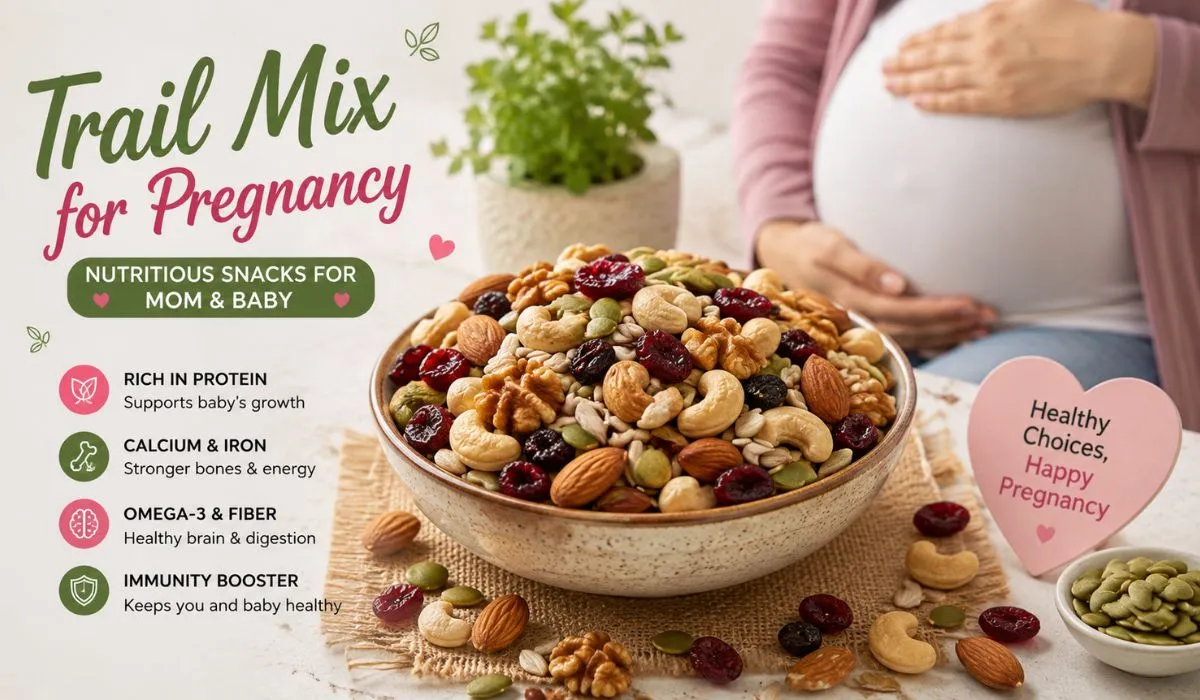
Anyone who’s been pregnant for more than a week knows snacking turns into its own weird little puzzle. One day nausea wipes out every food you love. The next, your blood sugar crashes at 3pm like clockwork and you need something now. Trail mix somehow handles both. You’re getting protein and healthy fats from the nuts, some fiber and natural sweetness from the dried fruit, and depending on the blend, a bonus of iron, magnesium, or folate. No refrigeration needed, it survives getting smashed at the bottom of your bag for a week, and it can settle a queasy stomach faster than most things in your kitchen.
That said, “trail mix” is a pretty broad label. A simple bag of almonds and raisins is a very different thing from the candy-coated, mystery-ingredient stuff at the gas station checkout. So it’s worth slowing down for a second before you toss one in your cart.
What to Actually Look For on the Label
Start with the nuts. You want them pasteurized — raw, unpasteurized nuts (the “raw almonds” you sometimes see at farmers markets, for example) carry a small but real risk of salmonella. Most packaged trail mix sold in stores already uses pasteurized nuts, so this usually isn’t something you need to stress over. But if you’re scooping from a bulk bin or buying from a small local producer, it’s worth just asking.
Next, glance past the nuts to see what else snuck into the bag. Some of the fancier trail mixes use fruit soaked in rum or brandy for flavor — it’s a small amount, sure, but since there’s no known safe level of alcohol in pregnancy, it’s easiest to just skip those. A handful of Asian-style trail mixes also throw in dried seafood or fish flakes, which can bring more mercury than you’d want. You won’t run into this in a standard nut-and-fruit blend, but it’s worth a quick check if you’re trying something new or imported.
Dried fruit deserves its own moment here too. Apricots, mangoes, and some raisins are often treated with sulfur dioxide to keep them from browning. Most pregnant women don’t need to think twice about this, but if you have asthma or know sulfites bother you, it can trigger symptoms — so look for “unsulfured” or “no sulfites added” on the label if that’s you.
And then, of course, there’s sodium and sugar. Plenty of store-bought mixes lean hard into candy pieces, honey-roasted coatings, or heavily salted seeds. Fine as an occasional thing, but not exactly what you want as your everyday snack — especially if you’re watching gestational diabetes or blood pressure. A simpler mix, mostly whole nuts and unsweetened fruit, is the better daily go-to.
One more thing worth knowing: nuts are dense. A quarter cup can quietly run 150–200 calories, and it’s shockingly easy to blow past that eating straight from the bag while distracted. Portioning it out ahead of time into little containers isn’t about restriction — it just makes it easier to actually enjoy it without going way past full.
Making Your Own (It’s Easier Than You’d Think)
If reading labels every time sounds exhausting, just make your own. Grab roasted, pasteurized almonds, walnuts, or cashews as your base. Toss in unsweetened dried cranberries or apricots. Add a spoonful of pumpkin seeds for a little extra iron and zinc. Craving something sweet? A few dark chocolate chips round it out nicely. That’s it — you’ve got protein, fiber, and a good spread of pregnancy-friendly nutrients, with nothing in there you need to second-guess.
Mistakes That Are Easy to Make (and Easy to Avoid)
It’s tempting to assume anything labeled “raw nuts” has been pasteurized — plenty haven’t been, and the packaging isn’t always clear about it. Gas-station or bulk-bin trail mix is another one to slow down on, since you genuinely don’t know what went into it. And even with a good mix in hand, eating straight from a family-size bag makes portion control basically impossible — pre-portioning solves that instantly. Candy-heavy versions aren’t off-limits, they’re just better as a treat than a daily habit.
Quick Answers to What You’re Probably Wondering
Is trail mix safe during the first trimester?
Yep, completely. Nothing about early pregnancy changes the advice — pasteurized nuts, no alcohol-soaked fruit, same as any other trimester.
Can I eat peanuts in trail mix while pregnant?
You can, unless you personally have a diagnosed peanut allergy. Health experts, including ACOG, have moved away from the old advice to avoid peanuts during pregnancy just as a precaution against allergies — that guidance is outdated now.
Are dried fruits in trail mix high in sugar?
Some are, yeah. Dried fruit packs more sugar per bite than fresh fruit does, simply because the water’s gone and everything’s concentrated. If blood sugar’s on your radar, go unsweetened or lean your mix a little heavier on nuts than fruit.
How much trail mix can I eat per day during pregnancy?
A quarter to a half cup as a snack is a solid amount for most women. It actually fits really well into the whole “small, frequent snacks” approach a lot of women find helpful for nausea and steadier blood sugar.
Is trail mix a good source of folic acid?
It can help a little — peanuts and sunflower seeds both carry some folate — but it’s not a replacement for your prenatal vitamin. Think of it as a nice bonus, not your main source.