
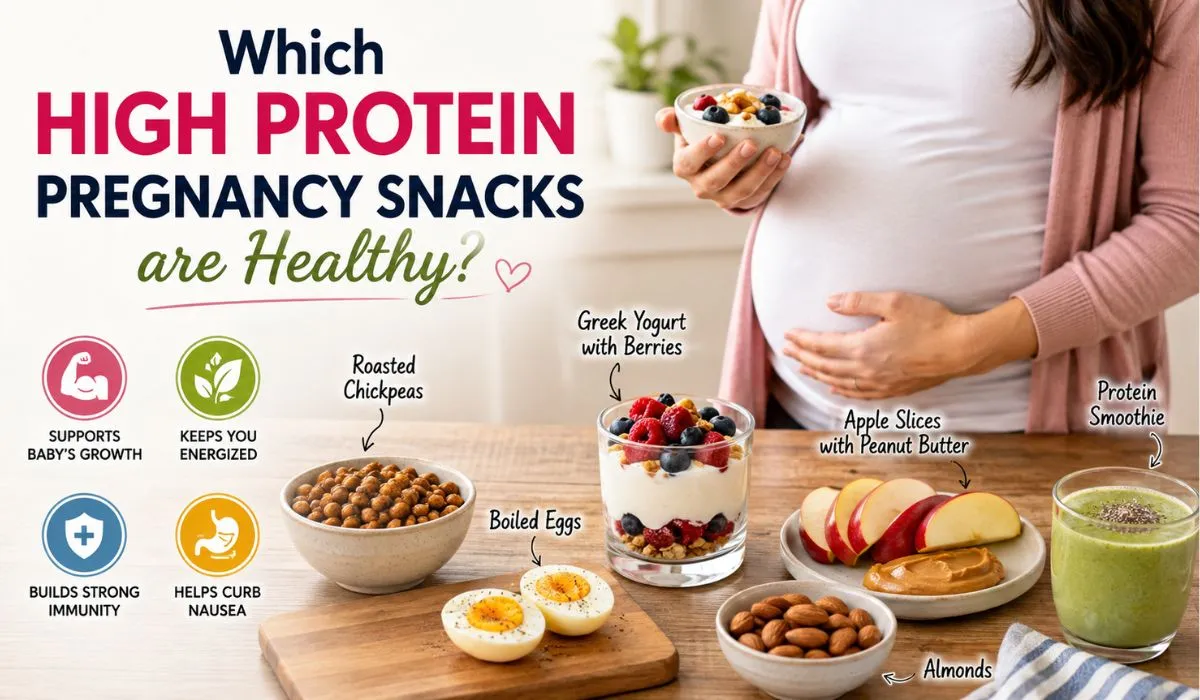
Quick answer: the best ones are simple, whole-food combos like Greek yogurt with berries, a couple of hard-boiled eggs, hummus and veggies, a small handful of nuts, or peanut butter on apple slices. They keep you full, keep your blood sugar steady, and give your baby real building blocks — without the sugar crash a lot of packaged “protein” snacks sneak in.
If you’re pregnant, you’ve probably heard the word “protein” more in the last few weeks than in your whole life before that. It gets talked about a lot, and honestly, for good reason — but nobody really explains why it matters so much, or what to actually reach for when 3pm hits and you’re starving again even though you just ate lunch.
Table of Contents
Why your body suddenly needs so much more protein
Right now, your body is doing something pretty wild — it’s literally building another human. Protein is one of the main raw materials for that: your baby’s tissue, muscles, and organs are being formed from it, and the placenta needs it too. On top of that, your own blood volume is expanding, sometimes by close to 50% by the third trimester. That’s a lot of extra work happening quietly in the background.
According to ACOG (the American College of Obstetricians and Gynecologists), most pregnant women need somewhere around 70–100 grams of protein a day. That number moves depending on your weight, your trimester, and whether you’re expecting twins — so it’s worth asking your OB or a registered dietitian what’s realistic for you specifically. Consider this article the “what to actually eat” part, not a replacement for that conversation.
Here’s the honest problem, though: three meals a day rarely gets you there comfortably. Especially if nausea is still lingering, or your stomach just doesn’t have room for big plates anymore in the third trimester. That’s really what snacks are for — not just filling time, but quietly closing the gap between what you’re eating and what your body actually needs.
So what makes a snack actually “healthy” for pregnancy?
Not everything wearing a “high protein” label deserves the hype. Some protein bars have as much added sugar as a candy bar, just dressed up better. A snack is genuinely worth reaching for when it does three things: it pairs protein with fiber or healthy fat so it actually holds you over instead of spiking and crashing your blood sugar, it’s made from real, recognizable ingredients rather than a chemistry set of a label, and it fits safely within pregnancy food guidelines — no unpasteurized dairy, no raw eggs, no unheated deli meat, no high-mercury fish.
The snacks worth keeping stocked in your kitchen
Greek yogurt is probably the easiest win of all — a single cup can have 15 to 20 grams of protein, plus calcium and probiotics that help with digestion, which tends to slow down during pregnancy. Stir in berries and a little honey and it stops feeling like “eating healthy” and starts feeling like dessert.
Hard-boiled eggs are another one worth having around. Each egg gives you about 6 grams of protein along with choline, which matters a lot for your baby’s brain development — and it’s a nutrient a surprising number of prenatal vitamins don’t cover well. Boil a batch on a Sunday and you’ve got grab-and-go snacks for the whole week.
If dairy isn’t your thing, hummus with cucumber, carrot, or bell pepper slices is a solid plant-based option, giving you both protein and fiber in one bite. Cottage cheese deserves more credit too — half a cup carries around 12 to 14 grams of protein, and it’s honestly delicious with pineapple or peaches.
A small handful of almonds, walnuts, or pistachios is another easy grab. They bring protein, healthy fat, and magnesium, which can genuinely help with those leg cramps that show up later in pregnancy. Just keep the portion small — a handful, not the whole bag — since nuts add up in calories fast.
And don’t sleep on peanut butter. Spread on apple slices or whole grain toast, it’s simple, satisfying, and gives you protein and fiber together. Edamame is a fun one too — steamed, lightly salted, eaten straight from the pod. One cup gets you around 17 grams of protein, which is more than most people expect from a bean.
A few snacks to think twice about
Protein shakes and bars aren’t off-limits, but it’s worth checking the label — some are loaded with added sugar, artificial sweeteners, or herbal ingredients that aren’t really meant for pregnancy. Deli meat and unpasteurized cheeses are best avoided unless heated until steaming, because of listeria risk. And as tempting as raw cookie dough is (no judgment), it carries the same raw egg concern mentioned earlier.
A couple of habits that actually help
Keep snacks visible — pre-cut veggies, boiled eggs, or portioned nuts at eye level in the fridge actually get eaten, while things buried in the back get forgotten. Try to pair protein with fiber rather than eating it alone, since that combination is what really keeps hunger and nausea from creeping back in. And don’t wait until you’re starving to eat something — with pregnancy, staying a little ahead of hunger usually works better than catching up to it.
FAQ
How much protein should be in one snack?
There’s no hard rule, but aiming for around 10–15 grams per snack is a reasonable way to chip away at your daily total without overdoing it.
Are protein bars safe during pregnancy?
Most are fine occasionally — just check for added sugar and unfamiliar herbal ingredients, and don’t lean on them as your main protein source.
Can I eat peanut butter while pregnant?
Yes, completely safe, and actually a great source of protein and healthy fat, unless you have a diagnosed peanut allergy.
What’s a good snack if I’m dealing with morning sickness?
Plain Greek yogurt, a few almonds, or a hard-boiled egg with crackers tend to sit well since they’re mild and don’t have strong smells.
Is it okay to snack right before bed?
Yes — a small protein snack like cottage cheese or a spoonful of nut butter before bed can even help keep your blood sugar steady overnight.