
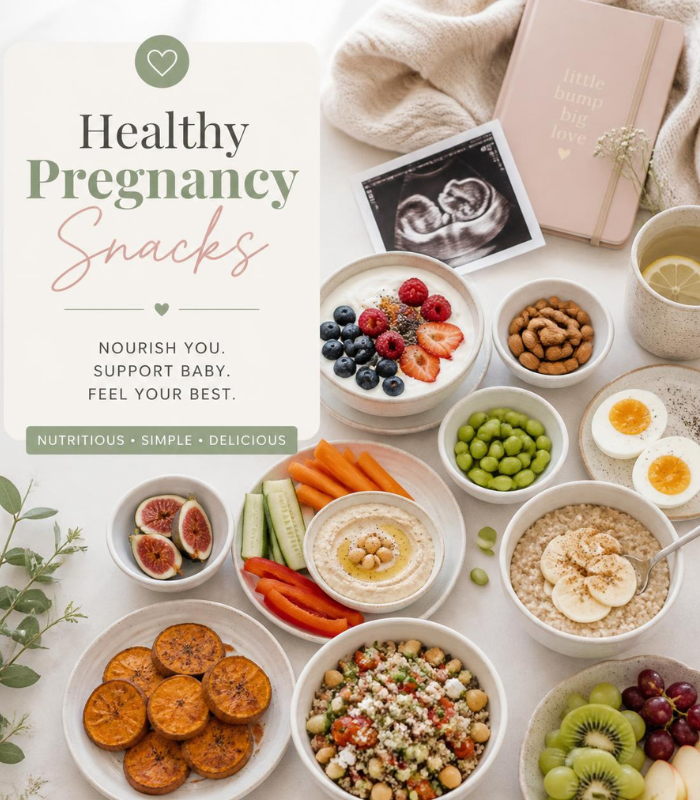
Pregnancy hunger doesn’t follow a schedule. Some days you’re nauseous and can barely look at food; other days you’re starving an hour after lunch and reaching for whatever’s closest — which is usually chips, not chickpeas. Snacking isn’t a side note in pregnancy nutrition; with blood volume, calorie needs, and protein requirements all shifting, snacks often do more nutritional heavy lifting than people realize. This guide covers healthy protein snacks for pregnancy, what to grab when nausea won’t let you eat much of anything, and honest answers on foods people ask about constantly — edamame, quinoa, almonds, sweet potato, and figs.
Table of Contents
Why Pregnancy Snacking Actually Matters
Blood sugar swings more during pregnancy, partly because of hormonal shifts and partly because many people naturally eat smaller, more frequent meals instead of three large ones. Going too long without eating can worsen nausea, trigger headaches, and leave you light-headed — so snacking well isn’t indulgent, it’s functional.
The two things worth prioritizing in a pregnancy snack: protein (satiety, tissue building) and fiber (steadier blood sugar, less constipation). A snack that’s just carbohydrate — crackers alone, a plain bagel — will leave you hungry again in 45 minutes. Pairing it with protein or fat roughly doubles how long it holds you.
Healthy Protein Snacks for Pregnancy
Protein needs rise across pregnancy, reaching an RDA of about 71 grams a day by the third trimester (ACOG). Snacks are the easiest place to close that gap without needing to overhaul your meals. A useful target: 10–20 grams of protein per snack.
| Snack | Approx. protein |
|---|---|
| Greek yogurt (1 cup) | 20–23 g |
| Cottage cheese (1 cup) | 24 g |
| 2 hard-boiled eggs | 12 g |
| Edamame (1 cup, cooked) | 17 g |
| Hummus + veggies (½ cup hummus) | 10 g |
| String cheese + almonds (1 oz) | 13 g |
| Trail mix with nuts (¼ cup) | 6–8 g |
These same combinations work as high protein pregnancy snacks for labor prep too — more on that below.
Healthy Alternatives to Pregnancy Cravings
Cravings are real and mostly harmless in moderation — but if you’re craving something specific most days, a swap that hits the same texture or flavor note tends to satisfy better than trying to white-knuckle past it entirely.
| Craving | Healthier swap that still satisfies |
|---|---|
| Ice cream | Frozen banana blended with peanut butter, or Greek yogurt with honey and berries |
| Chips | Roasted chickpeas, veggie chips, or air-popped popcorn with sea salt |
| Chocolate | Dark chocolate (70%+) with almonds, or a homemade date-and-cocoa energy ball |
| Fast food burger | Homemade turkey burger with avocado, or a lean burger from a chain with a simple grilled option |
| Soda | Sparkling water with a splash of 100% juice |
The goal isn’t eliminating the craving — it’s making the “yes” option one that also does something nutritionally useful.
Pregnancy Snacks for Nausea
Pregnancy snacks nausea-friendly picks skew bland, cold, and low-smell, since strong odors are one of the most common nausea triggers in the first trimester:
- Plain crackers or pretzels
- Cold applesauce cups
- Ginger chews or ginger tea
- Dry cereal, eaten by the handful
- Frozen grapes or a popsicle
- Plain toast with a thin layer of nut butter
A small snack every 2–3 hours, even just a few bites, tends to keep nausea more manageable than skipping ahead to a full meal once you’re already queasy — an empty stomach often makes nausea worse, not better.
Healthy Fast Food for Pregnancy
Some days, cooking isn’t happening, and that’s fine — a fast food run doesn’t have to derail nutrition if you know what to look for. Healthy fast food for pregnancy generally means picking options with real protein and produce rather than only fried, processed choices:
- Grilled chicken sandwich instead of fried, and skip or downsize the mayo-heavy sauce
- Burrito bowls with beans, rice, and grilled protein rather than fully fried options
- A side salad or fruit cup added to any order, instead of fries alone
- Oatmeal or a yogurt parfait from breakfast menus
- Whole-grain wraps with grilled protein over sub-style deli meats (deli meat carries a listeria risk unless heated until steaming)
One practical rule: order like you’d build a plate at home — a protein, something from produce, and a carb — even inside a drive-through menu.
Easy Healthy Meals for Pregnancy (When Snacking Isn’t Enough)
Some days call for something more substantial than a snack but still fast. A few easy healthy meals for pregnancy that take 15 minutes or less:
- Scrambled eggs with spinach and toast
- Rotisserie chicken over microwave rice with frozen veggies
- Tuna or chickpea salad in a wrap
- Quesadilla with black beans and cheese
- Yogurt bowl with granola, fruit, and nut butter
Healthy Breakfast While Pregnant
Mornings often bring the worst nausea of the day, which makes breakfast the meal people skip most — but an empty stomach can make morning nausea worse. Gentle, protein-forward options for a healthy breakfast while pregnant:
- Scrambled eggs with toast
- Greek yogurt with berries and a drizzle of honey
- Overnight oats made with milk and chia seeds
- Smoothie with yogurt, banana, and spinach (cold and easy on the stomach)
- Peanut butter on whole-grain toast
Pregnancy Oats: An Easy Daily Staple
Pregnancy oats are worth calling out on their own — oats are a whole grain that ACOG specifically names as a good pregnancy choice, and they’re fiber-rich, which helps with the constipation many people experience as pregnancy progresses. A bowl of oatmeal made with milk (instead of water) and topped with nut butter or berries turns a simple carb into a genuinely balanced snack or breakfast, with added protein from the milk and fiber from the oats themselves.
Is Edamame Safe During Pregnancy?
Yes — cooked edamame is considered a safe, nutrient-dense choice during pregnancy by ACOG and the FDA, providing plant protein, fiber, and folate, roughly one serving (about a cup) a day. The one non-negotiable: cook it thoroughly. Raw or undercooked soybeans can carry foodborne bacteria, so skip anything that isn’t fully steamed or boiled. If you have a soy allergy, avoid it and talk to your provider about alternative plant proteins like lentils or chickpeas.
Is Quinoa Good for Pregnancy?
Yes — quinoa is a complete protein (it contains all nine essential amino acids), which is unusual for a plant food, and it’s also a good source of fiber, iron, and folate. ACOG lists it among recommended whole grains during pregnancy. One prep note: rinse it well before cooking to remove its natural saponin coating, which can otherwise cause stomach upset. Cooked and rinsed quinoa is fine to eat regularly as part of a varied diet.
Is Almond Good for Pregnant Ladies?
Yes, in moderation. A one-ounce serving (about 23 almonds) provides roughly 6 grams of protein, 3.5 grams of fiber, and useful amounts of magnesium, calcium, iron, and vitamin E. They’re a convenient way to add staying power to a piece of fruit or a small snack. As with any nut, skip them if you have a known allergy, and stick to a handful-sized portion rather than a full bag at once — almonds are calorie-dense.
Can I Eat Sweet Potato During Pregnancy?
Yes, and it’s one of the more nutrient-dense choices available. A single medium sweet potato covers a large share of your daily vitamin A needs (pregnant women need about 800 mcg/day) through beta-carotene — the plant form of vitamin A, which the body converts as needed rather than risking the overload associated with high-dose preformed vitamin A supplements. Sweet potato also delivers fiber (helpful for pregnancy constipation) and vitamin B6. Stick to baked, boiled, or roasted preparations rather than fried, and moderate portions if you’re managing gestational diabetes, since it does raise blood sugar more than non-starchy vegetables.
Are Figs Good for Pregnancy?
Yes — is fig good for pregnancy is one of the most common questions on this topic, and the short answer is yes, in moderation. Figs (fresh or dried) provide fiber, calcium, potassium, and small amounts of iron and folate, and many people find their natural sweetness satisfying for a sugar craving without reaching for candy. The caveat: dried figs are concentrated in natural sugar, so most guidance suggests capping intake around 2–3 dried figs a day to avoid digestive upset or unwanted blood sugar spikes.
Good Labor Snacks
Hospital policies have shifted in recent years — ACOG and most major medical bodies now support light, easily digestible food and clear liquids for low-risk laboring patients, rather than the old “nothing by mouth” rule. That said, always confirm with your specific care team, since policies vary by hospital and risk level. Good labor snacks and healthy snacks for labor share a few traits: they’re light, easy to digest, portable, and provide steady energy without sitting heavy.
- Greek yogurt cups (about 13g protein, easy to eat between contractions)
- Chia pudding made ahead, eaten cold from a jar
- Quinoa salad with a light dressing — a complete protein that’s gentle on digestion
- Trail mix in small portions
- Honey sticks or dates for a fast energy boost
- Electrolyte drinks or coconut water for hydration
Pack these in your hospital bag ahead of time in individual, grab-and-go portions — during active labor, nobody wants to be portioning trail mix.
A Simple Snack Rotation to Start With
If you’re not sure where to begin, pick 4–5 of these and rotate through the week: Greek yogurt with berries, hard-boiled eggs, hummus and veggies, a handful of almonds with a piece of fruit, edamame, and oatmeal with nut butter. Having a short, reliable rotation removes the daily “what should I eat” decision — which matters most on the days you have the least energy to make it.
 Alona Smith