
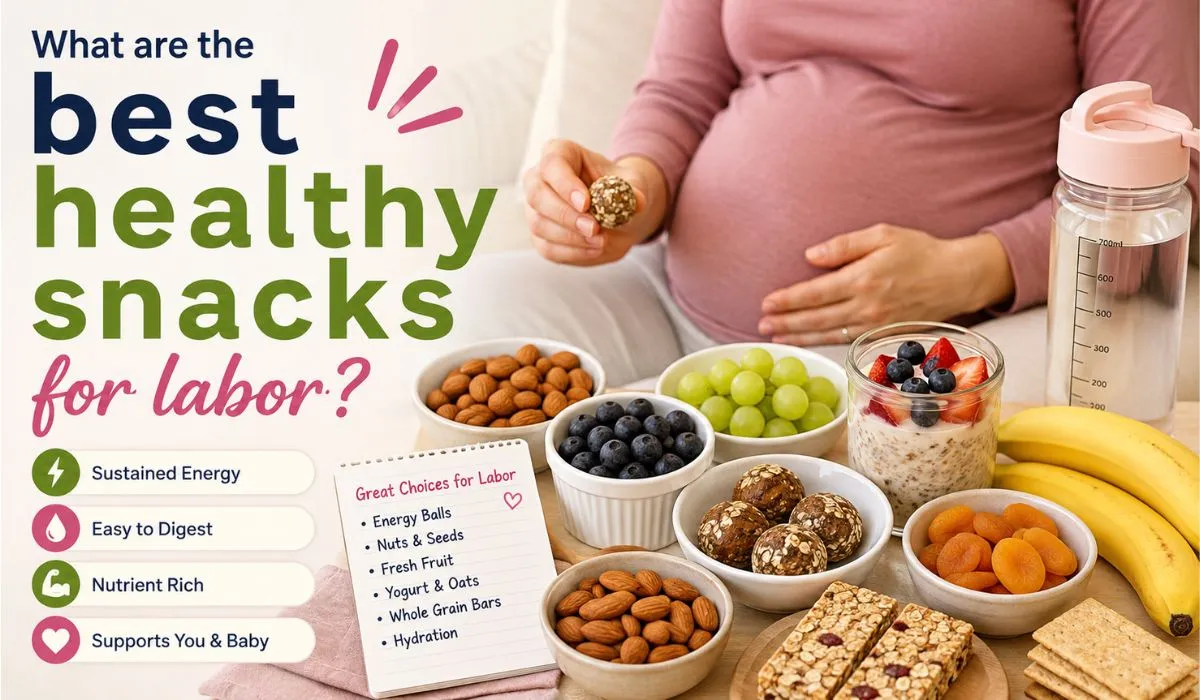
since I know you’re probably packing your hospital bag right now and don’t have time to scroll forever: go for foods that are easy on your stomach and give you steady energy — bananas, dates, granola bars, toast with a little honey, and something to sip like coconut water or an electrolyte drink. That’s really it. Nothing complicated, nothing your body has to work hard to process.
Everyone seems to have an opinion on this one, don’t they? Your mom says eat whatever sounds good. Your sister swears by ice chips and nothing else. The hospital pamphlet lands somewhere in the middle and doesn’t really explain why. It’s a lot of noise for something that should honestly be pretty simple. So let’s just talk it through, like two people chatting over coffee, and figure out what actually makes sense once labor starts.
Why Even Bother Eating During Labor?
Okay, here’s the comparison that always makes it click for me. Labor is a lot like running a marathon — it can go on for hours, sometimes way longer than you’d expect, and your body is doing real physical work the whole time. No marathon runner shows up to the starting line having skipped breakfast. So why would you walk into labor running on empty?
That said, this isn’t a “eat whatever, whenever” situation either. Health experts generally lean toward light, easy-to-digest foods, especially in early labor when contractions are still spaced out and manageable. According to ACOG, many low-risk pregnancies do allow light eating and drinking during labor — but it really depends on you. Your risk factors, your hospital’s specific policy, whether an epidural or C-section is a possibility. Honestly, the easiest thing to do is just ask your OB or midwife about this before your due date arrives, so you’re not standing there mid-contraction wondering if the granola bar in your bag is even allowed.
What to Actually Pack
Think about the kind of food you’d want if you had a mild flu. Gentle. Comforting. Nothing that feels like a brick sitting in your stomach. That’s pretty much the goal here.
Bananas are an easy first pick. Soft, naturally sweet, and you don’t have to chew much, which matters a lot when you’re mid-contraction and just not up for effort. They’re also full of potassium, which helps with muscle function — something your body will genuinely appreciate given everything it’s about to do. Dates are worth grabbing too. There’s research suggesting that eating dates regularly in the weeks before labor may help soften the cervix and even shorten labor time, so really, they’re doing double duty — one for the lead-up, one for the day itself.
Want something a bit more filling? Granola or energy bars made with oats, nuts, and dried fruit travel well and don’t need a fridge. Just skip the ones packed with added sugar — you want energy that lasts, not a spike that leaves you crashing an hour in. Toast or crackers with a smear of honey or nut butter are good too, especially early on when you can still handle a bit more texture.
And please don’t forget to drink something. Coconut water or an electrolyte drink helps replace what you’re losing through sweat and sheer effort, which matters even more if labor runs long. If solid food starts to feel like too much, applesauce or a fruit pouch is a nice fallback — barely any effort involved, but it still gives you a little natural sugar to keep you going.
What to Leave Out of the Bag
A few things just aren’t worth it. Heavy, greasy, or fried food tends to sit heavy and can make nausea worse — which is really the last thing you need layered on top of contractions. Sugary snacks like candy or soda might feel like a quick pick-me-up, but the crash afterward isn’t worth the trade. And carbonated drinks can bring on bloating that adds discomfort you just don’t need right now.
A Few Things That Actually Help
Pack your snack bag ahead of time. You do not want to be digging through the pantry once contractions are five minutes apart — trust me on that one. Stick to small bites instead of full meals, since your appetite is going to come and go, and that’s completely normal, not a warning sign. Keep sipping water or an electrolyte drink even if you don’t feel hungry, because staying hydrated matters just as much as eating does. And check your hospital’s food policy ahead of time — it really does vary quite a bit from place to place.
Frequently Asked Questions
Can I eat during active labor?
It depends on your hospital and your individual risk factors. A lot of providers are fine with light snacks in early labor but tend to pull back once things progress, especially if an epidural or C-section becomes likely.
What should I avoid eating before labor?
Heavy, greasy meals and very sugary foods are best skipped — they can bring on nausea or leave you crashing right when you need energy most.
Are dates really helpful for labor?
Some research suggests eating dates in the final weeks of pregnancy may support cervical ripening and shorten labor, though more studies are still needed. Either way, they’re a safe, nutritious snack to keep around.
What’s the best drink for labor?
Water, coconut water, and electrolyte drinks are all solid choices for staying hydrated and keeping your energy steady.
Should I bring my own snacks to the hospital?
Yes, honestly. Hospital food options tend to be limited, so packing your own easy-to-eat snacks ahead of time is a small thing that makes a real difference.