

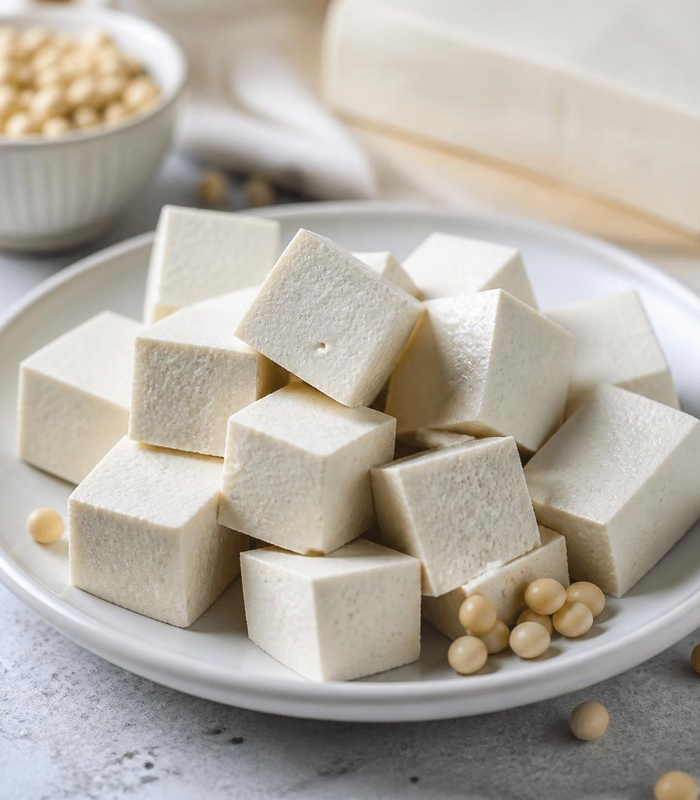
Bean curd is another name for tofu. A 100g serving has roughly 76 to 144 calories and 8 to 17g of protein, depending on how firm it is. Tofu made with calcium sulfate can also supply a good share of your daily calcium. It has no cholesterol and almost no sodium.
If you’re searching this because you’re pregnant, tofu is one of the easiest plant proteins to plan meals around. Here’s what’s actually in it.
Bean curd nutrition per 100g
The numbers below come from USDA data. “Firm” tofu holds less water, so the same weight gives you more protein and calories.
| Soft | Regular | Firm | Fried | |
|---|---|---|---|---|
| Calories | 61 | 76 | 144 | 270 |
| Protein | 7g | 8g | 17g | 19g |
| Fat | 3.5g | 5g | 9g | 20g |
| Calcium | 110mg | 350mg | 683mg | 961mg |
(Check that “Firm” refers to calcium-sulfate-set tofu. Nigari-set firm tofu has far less calcium.)
Two things to notice. First, calories and protein rise together as water comes out. Second, calcium varies hugely, because it depends on what was used to set the curd.
Why the type matters
Tofu is made by curdling soy milk with a coagulant, then pressing the curds. Pressing longer makes it firmer.
- Soft or silken: Lightest, best for smoothies, soups and sauces.
- Firm and extra-firm: Most protein per bite, best for stir-fries and baking.
- Fried: Highest in calories and fat, because of the oil. Fine now and then, but not your everyday protein.
The coagulant matters just as much. Tofu set with calcium sulfate is the high-calcium kind. Check the ingredient list for “calcium sulfate” or “calcium chloride” if calcium is your goal.
What stands out nutritionally
- Protein: Firm tofu gives you around 17g per 100g, and it contains all the essential amino acids.
- Calcium: A 100g portion of calcium-set firm tofu can cover more than half of the 1,000mg many adults need daily.
- Low sodium: Plain tofu has under 15mg per 100g. Marinades and sauces are where the salt comes from.
- No cholesterol: Good news if you’re swapping tofu in for meat.
- Minerals: It adds smaller amounts of manganese, selenium, copper, magnesium and iron.
Bean curd during pregnancy
Protein needs go up in pregnancy, and tofu is an easy way to meet them without meat. Calcium also matters for your baby’s bones and teeth, which makes calcium-set tofu especially useful if you don’t drink much milk.
On safety, the usual advice is that whole soy foods like tofu are fine in moderation, while concentrated isoflavone supplements are a different matter. Talk to your care provider about how much soy suits you.
Some good news from research: a large Japanese study of pregnant women linked higher tofu intake with fewer depressive symptoms. It was observational, so it shows an association, not that tofu prevents depression.
Food safety: Cook tofu thoroughly rather than eating it cold, and keep it refrigerated. Pregnancy makes you more vulnerable to foodborne illness.
Medication note: If you take thyroid medication, ask your provider about timing it away from soy foods.
Easy ways to use it
- Scramble firm tofu with spinach and turmeric for a high-protein breakfast.
- Blend soft tofu into smoothies or creamy soups.
- Bake cubes of extra-firm tofu and add them to a grain bowl.
- Pair tofu with vitamin C foods like peppers or citrus to help your body absorb the iron.
FAQ
Is bean curd the same as tofu? Yes. Bean curd is the traditional name for tofu, made from curdled soy milk.
Is bean curd good for weight loss? It’s low in calories for its protein content, so it can help you feel full. Fried versions are much higher in calories.
How much protein is in bean curd? About 8g per 100g for regular tofu and about 17g per 100g for firm tofu.
Is bean curd high in calcium? It can be, if it’s set with calcium sulfate. Always check the label.
Can I eat tofu every day while pregnant? Many people do, in moderate amounts. Ask your provider what’s right for you.
 buzztumt@gmail.com