

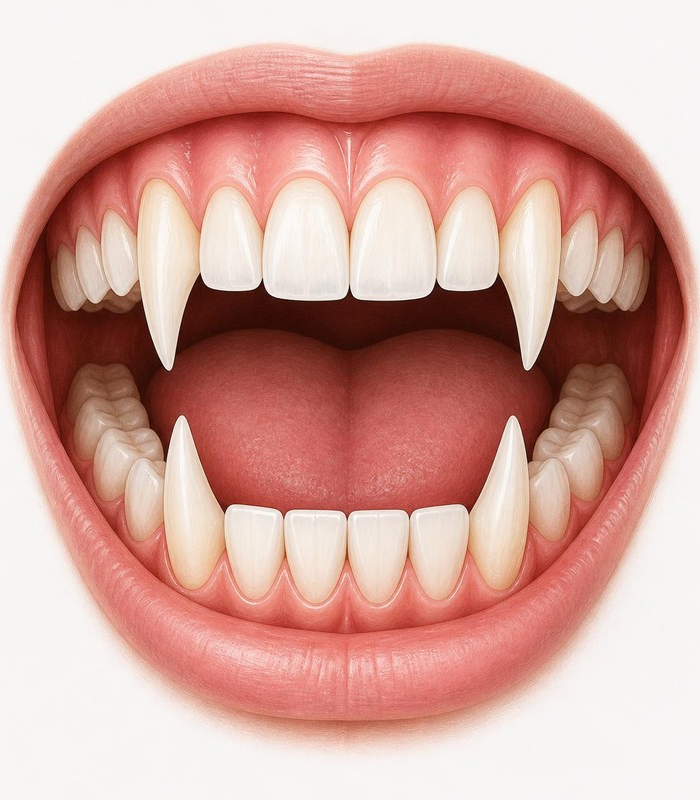
If you’ve heard someone say “k9 teeth” and pictured a dog, you’re only half wrong. K9 is a playful shorthand for “canine,” and yes, you have a set of them too. They’re the pointed teeth sitting right beside your front teeth.
Table of Contents
What are K9 teeth?
K9 teeth are your canine teeth. Most adults have four: two on top and two on the bottom, one on each side. They’re usually longer and sharper than the teeth around them, which is where the dog comparison comes from. Dentists also call them cuspids, and the upper pair often gets the nickname “eye teeth” because they sit roughly beneath your eyes.
What do they actually do?
Canines have a few jobs:
- Tearing food. Think of biting into a crusty piece of bread or a chewy steak. Your canines do the gripping and ripping.
- Guiding your bite. When you slide your jaw side to side, canines help steer the other teeth into place.
- Shaping your smile. They give your mouth its structure and support your lips and cheeks.
They also have some of the longest roots of any teeth in your mouth, which is why they’re so stable and tend to be among the last teeth lost with age.
When do K9 teeth come in?
You get two sets in your lifetime.
- Baby canines: around 16 to 23 months old, and they fall out somewhere between ages 9 and 12.
- Adult canines: lower ones usually arrive around 9 to 10, and upper ones around 11 to 12.
Every child is different, so a few months either way is normal.
What if a canine gets stuck?
Canines are the second most common teeth to become impacted, right after wisdom teeth. That means the tooth stays trapped under the gum instead of coming through. Signs to watch for include a baby canine that won’t fall out, a gap where the adult tooth should be, or swelling and tenderness in the area. A dentist can confirm it with an X-ray, and treatment often involves braces, sometimes with a small procedure to help guide the tooth down.
How to take care of your canines
Because they stick out a little, canines are prone to gum recession. A few habits help:
- Brush gently with a soft-bristled brush, twice a day for two minutes.
- Don’t scrub hard. Pressure wears gums down faster than plaque does.
- Clean between your teeth once a day.
- See your dentist every six months.
What about actual dog K9 teeth?
Dogs have four canines too, and they’re far more dramatic. Puppies get 28 baby teeth, which they lose at around 3 to 6 months, and adult dogs end up with 42. Sometimes a puppy tooth refuses to leave, especially in small breeds, so a vet check is worthwhile if you see two teeth crowded into one spot.
Frequently asked questions
How many K9 teeth do humans have?
Four in total, two on the top and two on the bottom.
Why are they called K9 teeth?
Their pointed shape looks like a dog’s fangs, and “K9” is simply a phonetic spelling of “canine.”
Are K9 teeth the same as eye teeth?
Mostly. “Eye teeth” usually refers to the upper canines.
Do canine teeth hurt when they come in?
Some kids feel mild soreness, and that’s normal. Ongoing pain or swelling is worth a dental visit.
 buzztumt@gmail.com