

Somewhere between the third and fourth feed of the night, a lot of parents lift their baby’s top lip, spot a little band of tissue, and panic. Then comes the Googling. Then the photos. Then more panic.
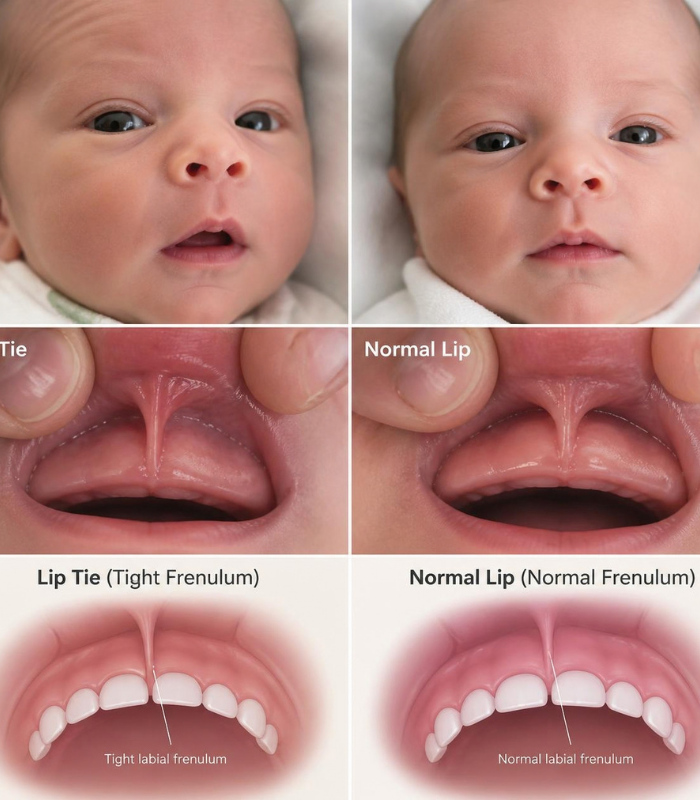
Take a breath. That band is called the upper lip frenulum, and every baby has one. Having it is normal. It’s only called a lip tie when it’s tight enough to hold the lip back and cause real trouble with feeding.
What a Normal Frenulum Looks Like
Picture a thin, stretchy strip running from the inside of the upper lip down to the gum. Nothing dramatic. In one photo-based study, every single newborn had one, and most were attached right at the edge of the gum.
Here’s a detail that calms a lot of people down. In a study of 100 healthy newborns, even the biggest frenulums, the ones reaching the gum edge, weren’t tied to nursing pain in mothers. Big doesn’t automatically mean bad.
What Might Point to a Lip Tie
A tie is more likely to look thick, tight or fibrous, and it may reach further down the gum. Still, the looks aren’t the main clue. Watch how the lip moves. When a baby feeds, the upper lip normally flares outward. If it stays tucked in and can’t lift, that’s worth noting.
You’ll run into grading systems online, with classes and numbers attached. Don’t lean on them. In one study, experts looking at the same photos couldn’t reliably agree on the grades. A number on a chart can’t tell you whether your baby is feeding well.
Why Pictures Only Take You So Far
One photo, one angle, one moment. Change the lighting, pull the lip a little differently, or catch a baby mid-cry, and the same mouth looks like a different mouth. Pictures are great for learning what the anatomy looks like. They’re poor at showing how it works, and how it works is what decides whether anything needs fixing.
Signs Worth Paying Attention To
- Nursing that still hurts after the first week or so
- A latch that’s shallow, clicky or keeps slipping
- A baby who falls asleep mid-feed or seems hungry constantly
- Slow weight gain
- Milk dribbling from the corners of the mouth
None of this proves a lip tie. Positioning, milk flow and tongue tie can cause the same things. Think of a lip tie as one suspect in a lineup.
A Word on Tongue Tie
Lip tie and tongue tie get mentioned in the same breath so often that people assume they always come as a pair. They don’t. One lactation professional points out that automatically pairing them up spreads confusion and misinformation. If feeding is rough, ask someone to assess the tongue separately.
What to Do Next
- Book a feeding assessment with an IBCLC lactation consultant, ideally one who watches a whole feed, not just a quick peek at the mouth.
- Ask your pediatrician or a pediatric dentist to examine your baby’s mouth.
- If a frenectomy gets suggested, ask what exactly they see, how it links to your baby’s feeding, and what happens if you wait. Getting a second opinion is completely reasonable.
One more comforting fact: frenulums often stretch and shrink as babies grow, and there’s no clear evidence that lip ties cause speech problems later.
Quick Answers
Is an upper lip frenulum normal?
Yes, all babies have one.
Does every lip tie need cutting?
No. Feeding problems and a professional’s assessment should drive that decision.
Can I diagnose it from pictures?
You can learn what to look for, but photos can’t confirm a tie.
The Bottom Line
A frenulum is normal. A frenulum that interferes with feeding deserves a professional look. So watch the feeding, not just the photo, and ask for help sooner rather than later. You’re allowed to keep asking questions until it makes sense.
 buzztumt@gmail.com