

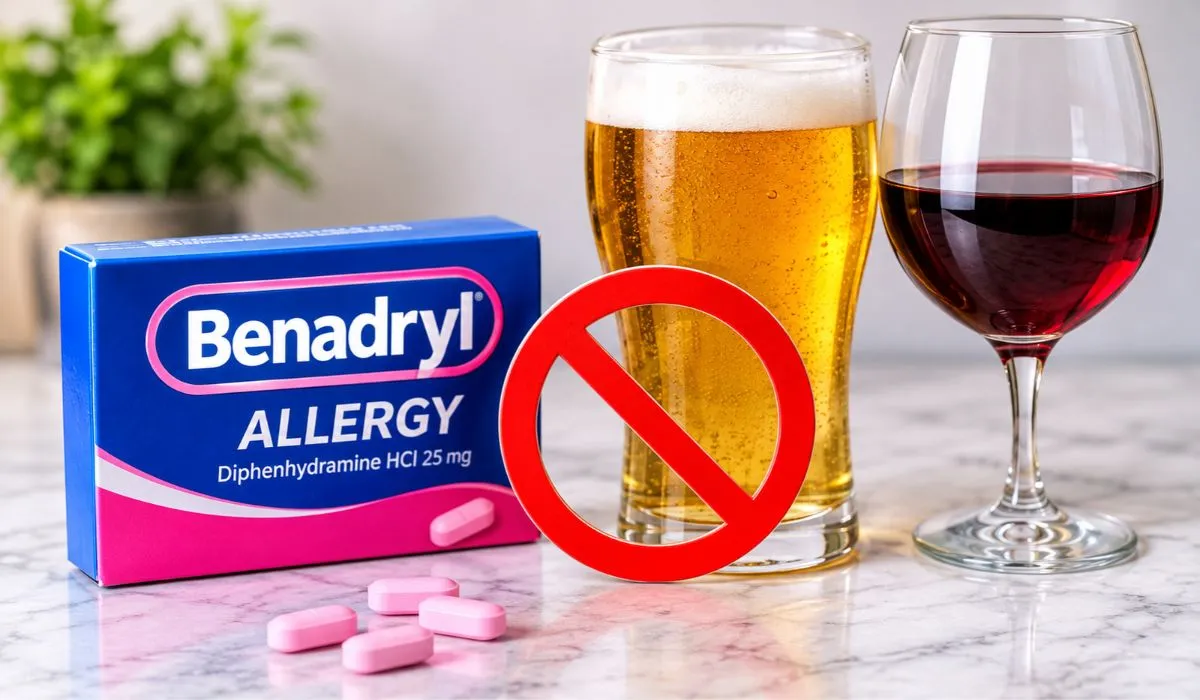
No, it isn’t safe. Benadryl (diphenhydramine) and alcohol both slow down your brain and body. Together they can cause heavy drowsiness, clumsiness, confusion and, in serious cases, slowed breathing. If you’ve had a drink, skip the Benadryl. If you’ve taken Benadryl, skip the drink.
Table of Contents
Picture a Friday night. You’re halfway through a glass of wine, your eyes start itching, and the only allergy pill in the cabinet is Benadryl. It feels harmless, and it’s an easy mistake to make. But this one deserves a second thought.
What Benadryl actually does
Benadryl is the brand name for diphenhydramine, an antihistamine that eases allergy symptoms like rashes, coughs and irritated eyes, throat and nose. It’s also a first-generation antihistamine, which means it crosses into the brain and causes sedation. That’s why some people take it as a sleep aid. It’s also why it doesn’t play well with alcohol: both are central nervous system depressants.
What happens when you mix Benadryl and alcohol
Two sedatives don’t just add up. They stack. You may feel very sleepy, dizzy and foggy, with slower reflexes and patchy memory. Judgment goes first, and that’s the part that gets people hurt.
Benadryl alone is stronger than most people think. In one driving simulator study, a single 50 mg dose impaired driving as much as, or more than, a blood alcohol level of about 0.10%. Add real alcohol on top and the effect is worse. In heavier cases the combo can bring dangerous drops in blood pressure and serious central nervous system depression. Even the mild outcome isn’t fun, since both can dehydrate you and make a hangover worse.
“But what if I wait a couple of hours?”
Honestly, that doesn’t help much. Alcohol hangs around for hours, and so does Benadryl. Its half-life can stretch from about four hours in children to as long as 18 hours in older adults. Some sources suggest waiting at least 8 to 12 hours between the two. Your body, age and dose all matter, so if you’re unsure, ask a pharmacist.
Who needs to be extra careful
Older adults are at higher risk. The American Geriatrics Society’s Beers Criteria lists diphenhydramine as potentially inappropriate for people 65 and older because of falls, confusion and sedation. People with sleep apnea, COPD or liver problems should be careful too, along with anyone on other medicines. Antidepressants, sedatives and cough or cold remedies can all interact. Some syrups even contain alcohol themselves.
If you’re pregnant or trying to conceive, the answer is simpler. The CDC says there’s no known safe amount of alcohol during pregnancy. And ACOG encourages you to check with your OB-GYN or midwife before taking any over-the-counter allergy medicine, Benadryl included.
Smarter ways to handle allergies on a night out
If allergies flare up and you plan to drink, talk to a pharmacist about non-sedating antihistamines like loratadine or cetirizine, which are less likely to interact with alcohol. Saline rinses and cold compresses also help without any drowsiness. And don’t use Benadryl plus a nightcap to fall asleep. It’s one of the most common mistakes, and it can go wrong fast.
If you already mixed them
Don’t drive. Stay with someone who can keep an eye on you, and sleep on your side if you get drowsy. Call your local emergency number or poison control if the person is very hard to wake, confused, breathing slowly, or has a racing heart.
FAQs
Can you take Benadryl after drinking alcohol?
It’s best not to. Alcohol is still in your system, so the sedative effects can pile up.
How long after Benadryl can you drink alcohol?
Many sources suggest at least 8 to 12 hours. Older adults may need longer.
Is one drink with Benadryl okay?
It may not harm everyone, but it can still cause real drowsiness and poor coordination. Avoiding alcohol is the safest choice.
Can I take Benadryl while pregnant?
Ask your doctor first. Don’t start any allergy medicine on your own.