

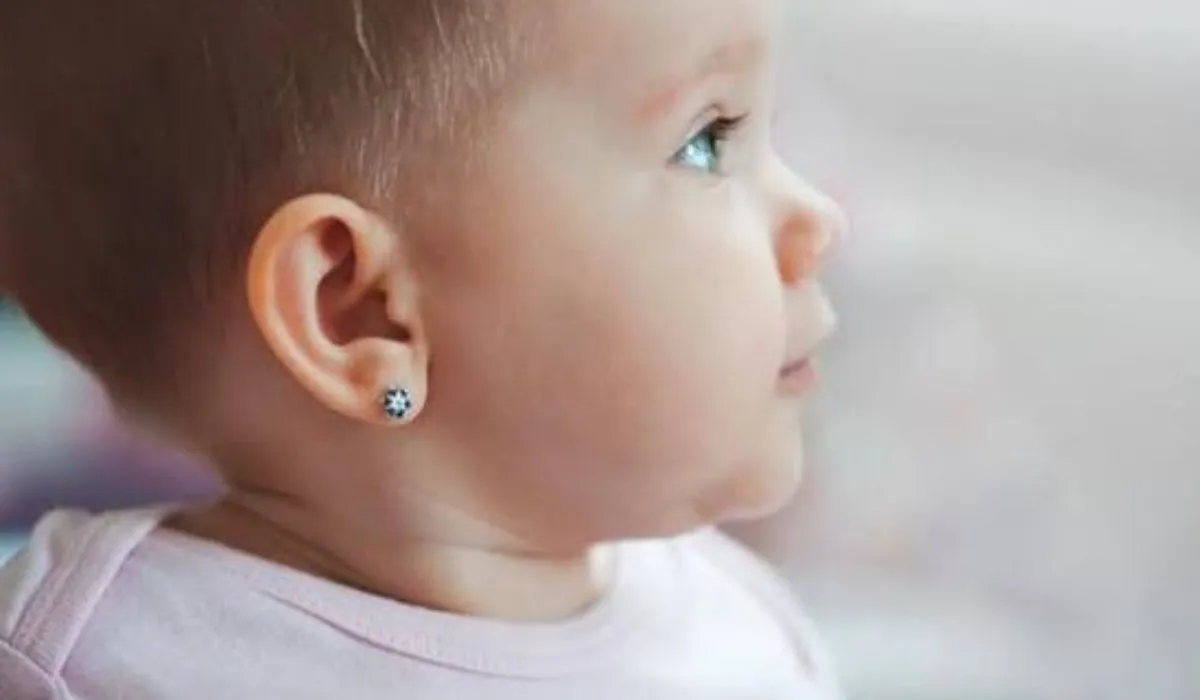
If you’re asking this question, you’re probably staring at your baby’s tiny earlobes wondering when (or whether) is the right time. Here’s the honest answer: there’s no single “correct” age. Most pediatricians lean toward waiting until after those first rounds of vaccines, somewhere around 4 to 6 months, once your baby’s immune system has had a bit more time to find its footing. But plenty of families pierce earlier, in the newborn weeks, and just as many wait until the toddler years, or skip it entirely and let their child decide for themselves someday. Truly, it comes down to your baby’s health, your own family’s traditions, and how ready you feel to handle the aftercare.
So let’s talk through what actually goes into that decision, so you can land on whatever feels right for your little one.
Why timing matters more than you’d think
Here’s the thing about those first few months: your baby’s earlobes are still developing, and so is their immune system. A piercing is a small wound, and like any wound, it heals best when the body behind it is a little more equipped to handle things. That’s really the whole reason so many pediatricians and pediatric nurses nudge parents toward waiting rather than piercing on day one.
There’s a practical piece to this too. A newborn can’t tell you their ear feels itchy, sore, or “off.” They can only cry, and at that age, they cry about a lot of things. A slightly older baby tends to give you clearer signals when something’s bothering them, which honestly makes the whole process easier to monitor.
The age windows parents tend to land on
Some families pierce within the very first weeks of life, often because it’s a cultural or family tradition passed down for generations. If that’s you, it’s still worth running it by your pediatrician first, since younger infants simply have less mature immune defenses to lean on.
Then there’s the window a lot of pediatricians point to as a nice middle ground: around 4 to 6 months. By then, your baby has usually had several rounds of vaccinations under their belt, and their immune system has had a little more time to mature. It’s early enough that many babies barely remember the pinch, but late enough that you’re not piercing a brand-new immune system.
Some parents wait even longer, closer to the first birthday, simply because they feel more confident managing aftercare once their baby is a bit sturdier and their routines are more predictable. And plenty of families skip the infant stage altogether, waiting until their child is old enough to actually ask for pierced ears and help take care of them. There’s genuinely no medical downside to waiting that long — it’s just a different path.
What’s worth thinking through before you book the appointment
Before you pick a date, it helps to sit with a few questions. Has your baby finished their first set of vaccinations? Are they healthy right now, with no skin conditions, ear infections, or illness going on? Do you have the bandwidth to clean the piercing site twice a day for the next several weeks, because that part matters more than people expect. And when it comes to who does the piercing, it’s worth seeking out a pediatrician, licensed piercer, or clinic that uses sterile, single-use needles rather than a piercing gun, along with hypoallergenic starter earrings in surgical steel, titanium, or 14k gold. If you can say yes to most of that, you’re in a good spot to move forward whenever you’re ready.
Aftercare basics worth knowing ahead of time
Once it’s done, the daily routine is simple but important: gently clean the area with saline solution once or twice a day for about 4 to 6 weeks. Try not to remove those starter earrings too early, since a baby’s piercing can close up surprisingly fast. And keep an eye on things — a little redness right after is normal, but excessive swelling, ongoing redness, or discharge is your cue to call the pediatrician rather than just waiting to see if it clears up on its own.
A few common mistakes worth steering clear of
It’s easy to get this part wrong without meaning to. Piercing during a cold, fever, or right after a round of vaccines puts extra strain on an immune system that’s already busy. Cheap or nickel-based earrings can trigger allergic reactions that make the whole healing process harder. Skipping the cleaning routine because your baby fusses through it (understandably) can slow healing down. And a mall kiosk piercing gun just isn’t the same as a sterile, single-use needle method — the difference in infection risk is real, so it’s worth being a little picky about where you go.
Questions parents often ask me about this
Is it safe to pierce a newborn’s ears?
It can be done, and plenty of families do it, but many pediatricians would rather you wait until your baby’s a few months old, once their immune defenses have had time to build up a bit.
Will an older baby feel more pain than a younger one?
Not really. There’s a quick cry from the pinch no matter the age, and it passes fast. The nice part about doing it while they’re still a baby is that they won’t remember it the way a toddler might.
How long until it’s fully healed?
Give it about 4 to 6 weeks of steady cleaning, and you should be in good shape.
Is it totally fine to just wait until they’re older?
More than fine. There’s no medical reason it has to happen in infancy. Some of the healthiest, easiest-healing piercings happen when a child is old enough to ask for them and help take care of them.
Should I run it by the pediatrician first?
I’d say yes, especially if your baby was born early, has any skin conditions, or has dealt with ear infections before. It’s a five-minute conversation that can save you a lot of worry later.
If there’s one thing to take away from all this, it’s that there’s no rush and no wrong answer here.
Whether you pierce at two months, six months, or wait until your child is old enough to ask you themselves, what matters most is that it’s done safely, cleanly, and at a time that feels right for your family.
 Emma Gill