
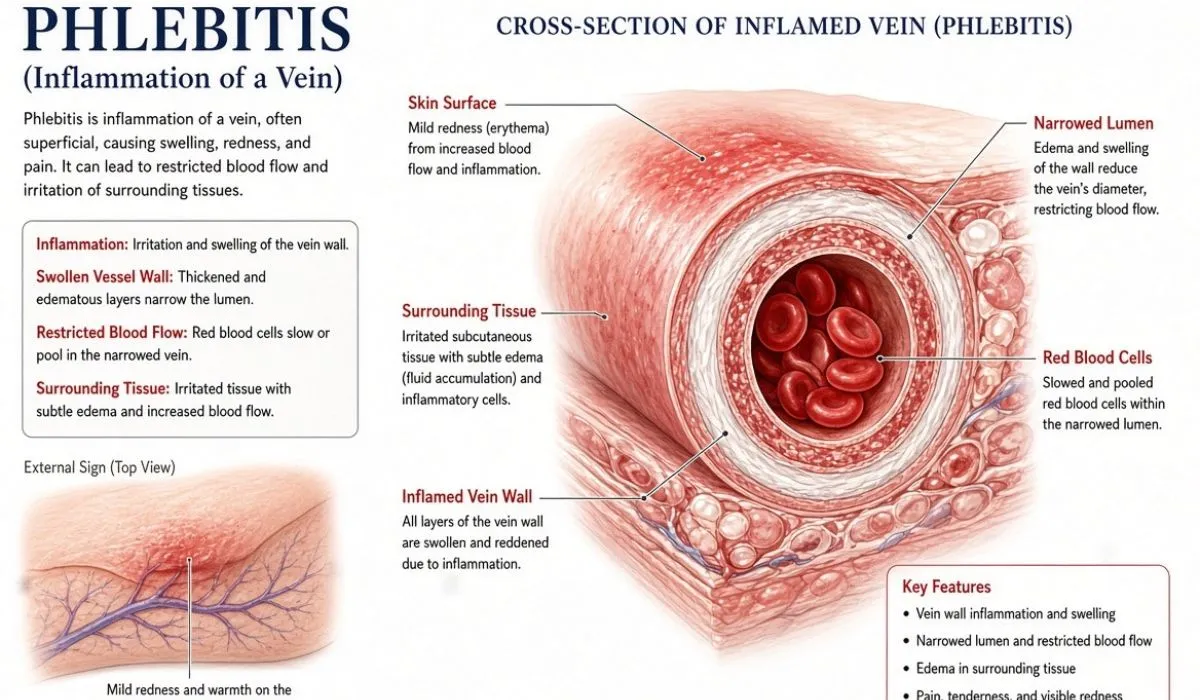
Inflammation of a vein is called phlebitis. The vein wall gets irritated, and you end up with a red, warm, sore patch along it. If a small clot has formed too, it’s called thrombophlebitis. In pregnancy it’s fairly common, and the surface kind usually clears up with simple care.
Table of Contents
You’re folding laundry and notice a sore line on your calf. Press it and it hurts. The skin looks a bit pink and feels warmer than the skin around it. Maybe there’s a firm cord under the surface, like a thin piece of string. That’s what most women describe, and it’s usually a surface vein that’s cross with you for a few days.
So why now? Pregnancy changes how blood moves. You carry more of it, your hormones loosen the vein walls, and the baby’s weight presses on the big veins in your pelvis. Blood in the legs slows down and your blood also clots a little more easily, which your body does to get ready for birth. The CDC points out that pregnancy raises clot risk, and it stays higher for some weeks after delivery. An IV drip, a long car ride, or a desk job where you barely stand up can tip things further.
Now the part I really want you to read twice. A sore surface vein is one thing. A clot in a deep vein (deep vein thrombosis, or DVT) is another, and it needs a doctor fast. If one leg is clearly bigger than the other, if the pain is deep and feels like a cramp that won’t let go, or if the skin turns hot and tight, call your doctor that day. Chest pain, trouble breathing, or a pounding heart means the emergency room, no waiting. ACOG says pregnant women with these signs should be checked right away.
For a mild surface case, the home stuff is simple. A warm compress for 15 to 20 minutes a few times a day takes the edge off. Put your feet up when you rest. Walk around every so often, even if it’s just to the kitchen and back. Ask your provider about compression stockings, since they’ll know which strength suits you. And before you reach for a painkiller, check first, because ibuprofen is usually not recommended during pregnancy.
What about food? Honestly, nothing you eat will treat phlebitis. But the everyday habits help your circulation along. Water, fiber, and decent prenatal nutrition all matter. Fish and other omega-3 sources, and DHA for pregnancy in your prenatal vitamin, support your general maternal health, and so do iron-rich foods and the folic acid benefits you’re already getting from your pregnancy supplements. One catch: if you’re on blood thinners, talk to your doctor before changing how much vitamin K you eat, because it can interfere. And don’t add new supplements on your own just because a vein is sore.
A few things people get wrong. Rubbing or massaging a hard, painful vein is the big one, since you don’t want to shift a clot. Tight bands around the thighs don’t help either. And waving off swelling in just one leg as “normal pregnancy stuff” is risky. Swelling in both ankles by evening is common. One leg only deserves a call.
FAQs
Is inflammation of a vein dangerous during pregnancy?
The surface kind usually isn’t. Deep vein problems can be serious, so get any one-sided swelling looked at.
How long does it last?
Mild cases often ease within a week or two. The firm cord can hang around a bit longer.
Can it come back?
It can, especially if you sit a lot. Moving often and wearing compression socks may lower the odds.
Is walking okay?
Usually yes. If you think there might be a clot, check with your doctor before exercising.
How is it different from varicose veins?
Varicose veins are twisted, enlarged veins. Phlebitis adds inflammation, so it’s sore, warm, and red.