

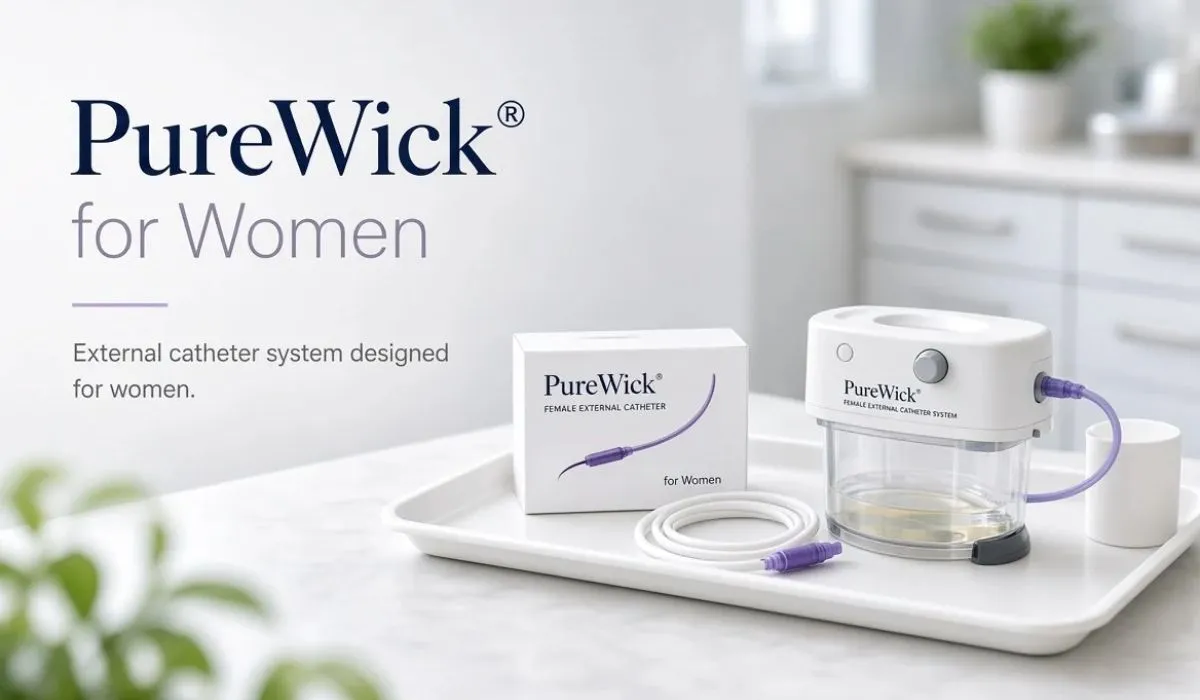
PureWick for women is a soft external catheter that sits against the body and pulls urine away into a collection canister, with no tube inside the body. It’s intended for non-invasive urine output management in adult women. It’s most useful for women who can’t easily get to the bathroom, whether from limited mobility, surgery recovery, or nighttime leaks.
Table of Contents
So, What Exactly Is It?
Picture a soft, absorbent strip of fabric. You place it between the legs, and it connects by tubing to a small suction pump. When you pee, the wick draws the urine away and into a canister, so your skin stays dry.
The suction wicks voided urine away from the patient and into a designated collection canister. That’s really the whole idea. Nothing goes inside you, which is why people call it a female external catheter instead of the traditional kind.
Who Might Use PureWick for Women?
Mostly it’s for women dealing with urinary incontinence or bladder leakage, especially at night. It also helps if you’re bedridden or have limited mobility and getting up is hard or painful.
There’s a postpartum angle too, which is why it fits on a pregnancy site. After childbirth, a lot of new moms deal with leaks and slow recovery, particularly after a C-section or a rough delivery. ACOG and other health groups note that bladder leaks after birth are common, and pelvic floor exercises are usually the first thing doctors suggest. Some women still want extra help while they heal, and a device like this can make those first weeks easier. Ask your doctor first, though, because it isn’t meant for everyone.
How It Works Day to Day
Setting it up takes a few minutes. You wash your hands, connect the wick to the canister tubing, and position it snugly against the body. Placing it snugly between the labia and gluteus holds it in place for most patients. Then you switch on the pump and lie down or sit reclined.
Leaks can happen at first. The manufacturer says leaking may be possible until you find the placement that works for your anatomy, and mesh underwear can help hold it steady for the first few nights. Most people sort it out in a few tries.
Tips That Make It Easier
Wash the area gently before each new wick, and take a quick look at your skin. If you notice redness or soreness, stop and call your doctor.
Swap the wick on time. BD says to replace it at least every 8 to 12 hours, or right away if it’s soiled with feces or blood.
Please don’t insert it. The brochure says never to insert it into the vagina, anal canal, or any other body cavity. It’s strictly external.
Common Mistakes to Avoid
The biggest one is poor placement. If the wick is too far forward or sits crooked, urine slips past it, so take your time with positioning.
Another is reusing a wick. The PureWick Flex is designed for single use only. A used one gets less absorbent and can irritate your skin.
Last, don’t use it if you can’t empty your bladder. The Flex version should not be used on patients with urinary retention. That’s a conversation for your doctor, not something to guess at.
Frequently Asked Questions
Is PureWick for women painful?
Most women say it feels like a soft pad. Nothing is inserted, so it shouldn’t hurt. Stop using it if it does.
Can I walk around with it?
Not really. It’s designed for lying down or sitting reclined. BD says to remove it before getting up and walking.
Can I wear underwear with it?
Yes. Many women wear mesh underwear to help hold the catheter in place and reduce leaks and skin irritation.
Does it work during pregnancy?
There isn’t much guidance on this, so talk to your OB or midwife before trying it. After delivery is a different story, and your care team can tell you whether it makes sense for your recovery.
Is the pump loud?
It has a low hum, and some people notice it more than others. Try it for a night or two before you decide.