

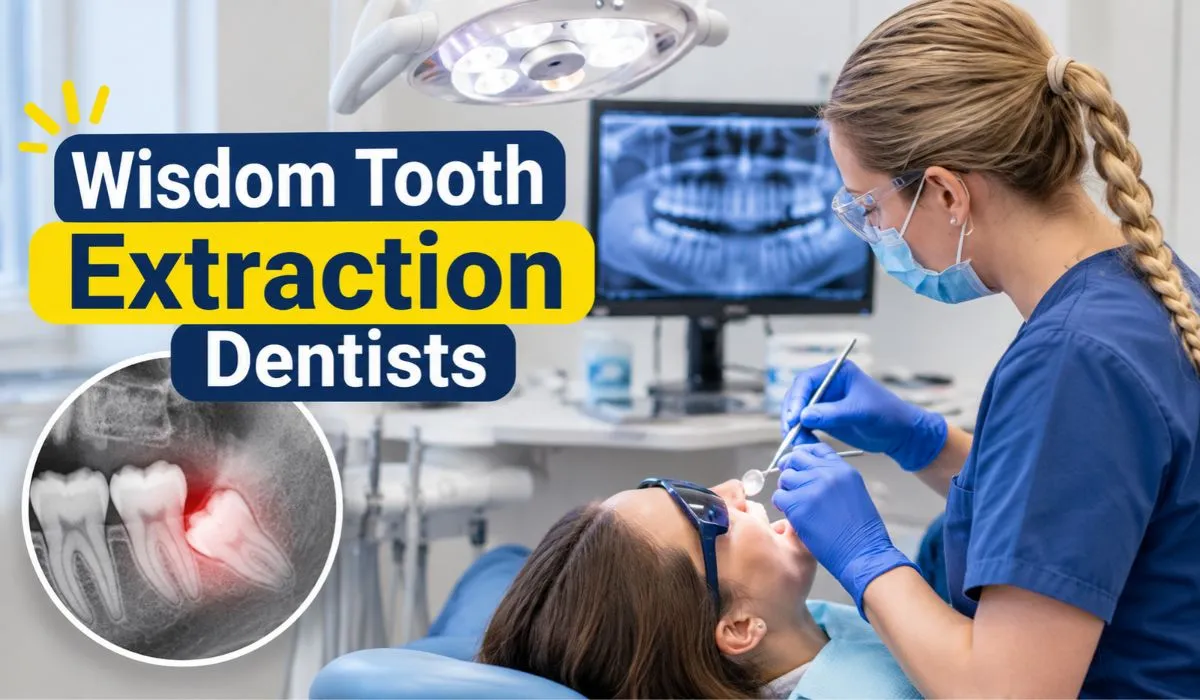
If your wisdom tooth has come in fully and you can see most of it, a regular dentist can usually take it out. If it’s stuck under the gum or growing sideways, you’ll most likely be sent to an oral surgeon. That’s the short answer, but the details are worth a few minutes.
Table of Contents
I used to assume “wisdom tooth removal” meant one specific kind of doctor, full stop. It doesn’t. There are two routes, and which one you end up on depends mostly on what the tooth is doing back there.
Regular dentist or oral surgeon?
Start with your own dentist. They’ll take an X-ray, usually a panoramic one that shows the whole back of your jaw, and tell you what they see. A tooth that has poked all the way through the gum, with simple-looking roots, is often something they’ll handle right in the chair. Sometimes the same day.
Impacted wisdom teeth are another story. Impacted just means trapped: under the gum, in the bone, or leaning into the molar next to it. The American Association of Oral and Maxillofacial Surgeons says these cases are exactly what surgeons are trained for. And honestly, that’s usually the better call. They do it all day, they can offer deeper sedation, and they know how to work around the nerve that runs close to the lower third molars.
Some general dentists do surgical extractions too, so ask. It costs nothing. A good one will tell you straight if they’d rather refer you.
How to know it’s time
Pain at the very back of the jaw is the obvious sign. But plenty of people notice smaller, stranger things first. A puffy flap of gum. A bad taste that mouthwash can’t touch. A jaw that feels stiff when you yawn. When the gum around a half-erupted tooth gets infected, dentists call it pericoronitis, and once you’ve had it, it tends to come back.
And sometimes nothing hurts at all. You hear about it at a routine checkup. Don’t brush that off just because you feel fine, because a tooth that’s quietly pressing on its neighbor can do damage you won’t notice for a while.
A friend of mine put hers off for almost two years. By the time she went in, the tooth next to it had a cavity that couldn’t be reached properly. She ended up needing more work than she’d have needed if she’d just gone in earlier.
What the appointment feels like
Less dramatic than you’re picturing, probably. You get numbed with local anesthesia, and if needles make you nervous you can ask about sedation. You’ll feel pressure and a bit of tugging, but not pain. A simple extraction can be done in around twenty minutes. A surgical one takes longer, since the surgeon may need to open the gum or break the tooth into smaller pieces first.
Then you go home with gauze, a printed sheet of instructions, and an ice pack.
Recovery, without the drama
Take it easy for a few days. Swelling tends to peak around day two or three and then settles down. The NHS advises sticking to soft, cool foods at first and not rinsing your mouth hard for the first day. The Mayo Clinic adds that straws and smoking are a bad idea, because suction can pull out the blood clot that protects the socket. Lose that clot and you may get dry socket, which hurts far more than the extraction did.
So if your pain is getting worse around day three instead of better, call the office. Don’t wait it out.
Small things that help: buy yogurt, soup and mashed potatoes before the appointment, not after. Sleep with your head propped up for a night or two. Line up a ride home if you’re being sedated. And please don’t poke at the socket with your tongue or a finger, even though it feels strange. Leave it alone.
Quick questions people ask
Can my regular dentist remove a wisdom tooth?
Yes, if it has fully erupted and looks straightforward. Impacted ones usually go to an oral surgeon.
Is wisdom tooth removal painful?
The procedure shouldn’t be, since the area is numb. Soreness afterward is normal and usually manageable with the pain relief your dentist recommends.
How long does recovery take?
Most people feel close to normal after about a week. The gum itself takes longer to heal fully.
What does it cost?
It varies a lot depending on where you live, your insurance, and how tricky the tooth is. Ask for a written estimate before you book.
Do all wisdom teeth have to come out?
No. If they’re healthy, fully erupted, and easy to clean, your dentist may just keep an eye on them.