
Two lines on a test strip, and suddenly the fridge feels like enemy territory. You open it, stare at everything inside, and close it again without touching a thing. If that’s where you are right now, welcome, you’re in good company. Here’s the short version so you’re not left hanging: eat small amounts often, lean on foods with folic acid, iron, protein, and calcium, and go easy on caffeine and anything raw or undercooked. That’s really it. Everything else is just detail.
Nobody warns you how odd your appetite gets in these first weeks. One day you’d fight someone for a mango. The next, the smell of your own dinner sends you straight to the balcony for air. It’s not you being dramatic, it’s just what this stage does. Try not to wrestle with it too much. And take this as your permission slip to relax a bit: your baby doesn’t need much food right now. Just the right kind, whenever you can manage it.
Table of Contents
Why These Quiet Weeks Actually Matter So Much
There’s nothing to show on the outside yet, no bump, no obvious sign, but underneath, a lot is happening. Your baby’s neural tube, heart, and major organs are all forming in these first twelve weeks, which is exactly why everyone keeps going on about folic acid so early. The CDC has said, plainly, that getting enough folic acid before and during this stage can meaningfully cut the risk of neural tube defects. One small daily habit doing a surprising amount of heavy lifting.
Meanwhile your own body is going through its own upheaval, and that’s usually the real reason behind the nausea, the exhaustion that ambushes you around 3pm, and the sudden hatred of foods you used to love. So no, you’re not “eating for two” yet, no matter what your aunty insists. Right now you’re just eating carefully, for one very small person who’s only just getting started.
What a Day of Eating Might Actually Look Like
Forget three big meals for now, most women get through this more comfortably by grazing, a little something every couple of hours, rather than sitting down to full plates.
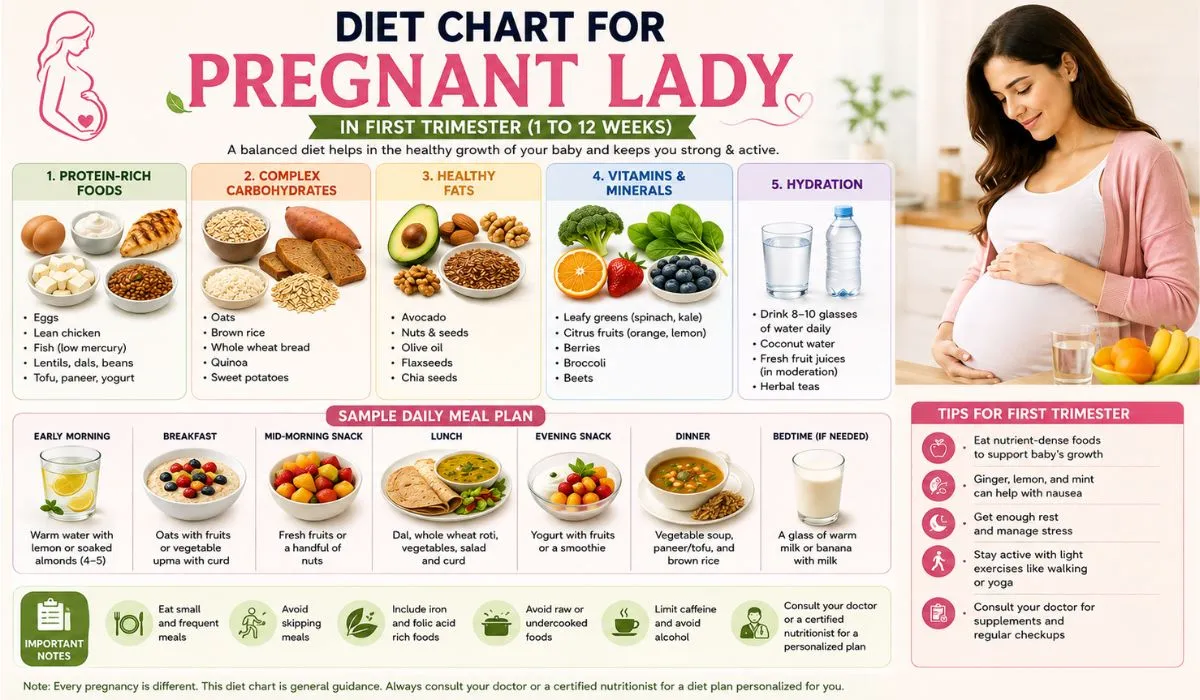
Mornings are usually the roughest part. Keep a few plain crackers or a slice of dry toast by your bed and nibble on them before you even sit up, it genuinely helps take the edge off before the nausea gets going. Once your stomach feels a bit steadier, breakfast could be as simple as oatmeal with a few berries and some soaked almonds, plus a small glass of milk if dairy’s still agreeing with you.
Mid-morning, a banana or a small handful of nuts usually does the job. Come lunchtime, try to get protein and iron on the plate together, dal or lentils with rice, some sautéed spinach, a small bowl of curd for calcium. Here’s a trick worth remembering: pair iron-rich food with something citrusy, a squeeze of lemon, a few orange segments, and your body actually absorbs the iron better for it.
Afternoons call for something light, roasted chickpeas or a fruit smoothie usually hit the spot. Dinner should stay gentle on the stomach, think a warm vegetable soup, some grilled paneer or fish, a piece of whole grain roti. And before bed, a warm glass of milk with a pinch of turmeric is a nice, quiet way to end the day.
The Nutrients Your Body Keeps Asking For
Folic acid is really the headline nutrient of this trimester, and once you know why, it makes sense. It’s already sitting in leafy greens, citrus fruits, beans, and fortified cereals, but most doctors will still put you on a prenatal vitamin with it, just as backup.
Iron matters more now too, because your blood volume is quietly increasing to support your growing baby. Lentils, spinach, pumpkin seeds, and lean meat, if that’s part of your diet, all help here.
Protein is doing unglamorous, behind-the-scenes work, building tissue for both of you. Eggs, dairy, legumes, tofu, or fish, whatever fits your diet and whatever you can actually stomach that particular day. Some days that list gets pretty short, and that’s fine.
Calcium is out there building your baby’s bones and teeth one meal at a time, without asking for much credit. Milk, yogurt, cheese, and sesame seeds get the job done without much effort on your part.
And DHA, an omega-3 fat, is quietly shaping your baby’s early brain development. Fatty fish, walnuts, and flaxseeds are easy, low-effort ways to bring it in.
A Few Things Worth Skipping for Now
This isn’t about being strict with yourself, just a few sensible swaps. Keep caffeine under roughly 200mg a day, about one cup of coffee, skip raw or undercooked eggs and meat, stay away from unpasteurized dairy, and avoid high-mercury fish like swordfish or king mackerel. Alcohol is the one thing genuinely worth cutting out entirely for now, no negotiating on that one.
Mistakes That Are Easy to Fall Into
Some women force themselves through full meals even when it’s miserable, while others swing the other way and barely eat once food starts feeling wrong. Both leave you running short on what your body actually needs. Another quiet trap is leaning entirely on the prenatal vitamin and forgetting real food exists. The vitamin fills gaps. It doesn’t replace actual meals, however tempting that shortcut sounds on a bad day.
Questions You’re Probably Sitting With Right Now
Is it normal to lose a little weight in the first trimester?
Yes, more common than anyone talks about openly, usually down to nausea or a shrinking appetite, and rarely something to panic over. If it feels significant, or just won’t ease up, bring it up at your next appointment.
Can I still have my tea or coffee?
In moderation, yes. Most guidelines suggest staying under 200mg of caffeine a day, roughly one regular cup, so your morning ritual doesn’t have to vanish entirely.
What if nausea means I can barely eat anything at all?
Stick to small, frequent bites of whatever you can actually keep down, and don’t be hard on yourself about getting it “right” this month. Plain carbs like toast or crackers usually go down easiest on the rough days
Do I really need to eat for two already?
Not yet, and that’s genuinely good news. Most women don’t need any extra calories at all in the first trimester. Right now it’s much more about what you’re eating than how much of it.
 Emma Gill