

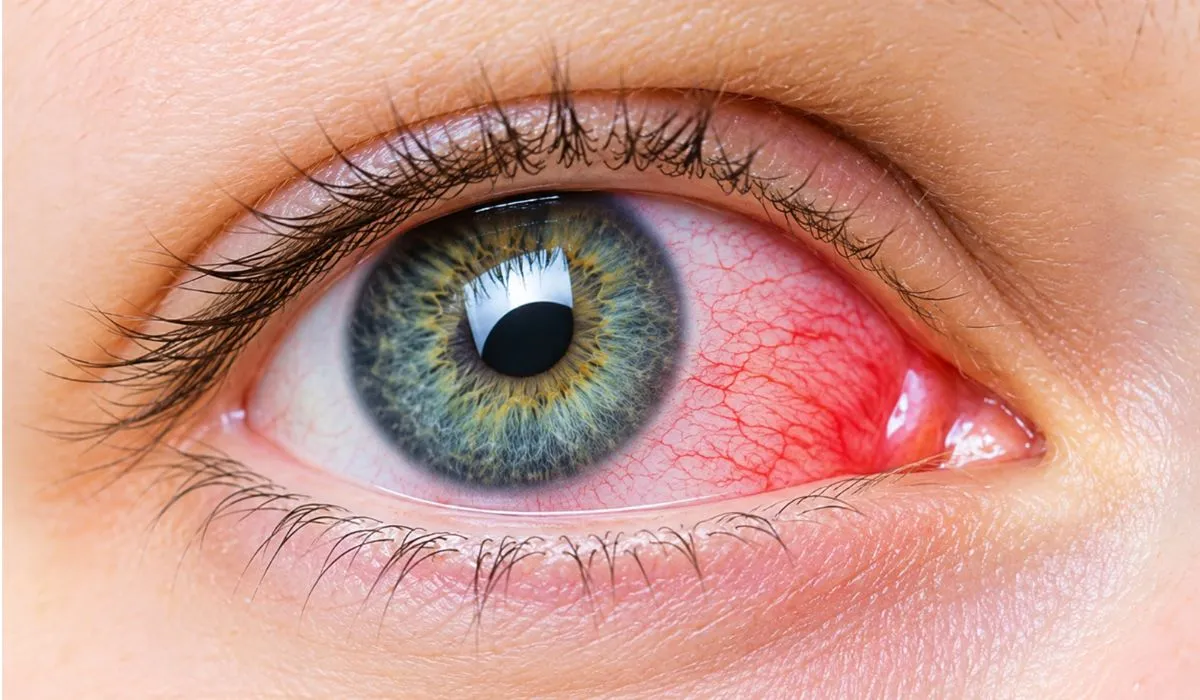
You glance in the mirror in the morning and the white of your eye looks pink, or worse, properly red. Maybe it stings a little. Maybe it doesn’t hurt at all and you just look tired. Either way, the first thought is usually the same: is this serious?
Most of the time, an eye inside reddish is not an emergency. But sometimes it is, and the difference matters. Here’s how to tell.
Table of Contents
Why Does the Eye Look Reddish Inside?
The short answer: the tiny blood vessels on the surface of your eye have swollen or become inflamed. The white part, called the sclera, normally looks clear because those vessels are thin and barely visible. When something irritates them, they widen and the eye looks bloodshot.
So an eye inside reddish is a sign, not a diagnosis. The real question is what set it off.
The Everyday Causes
Most red eyes come from something harmless. Allergies are a big one. Pollen, dust, pet dander and mold make your body release histamine, and your eyes pay for it with itching, watering and redness. Dry eye is another. When your tears can’t keep the surface properly coated, the eye gets irritated and turns pink, which is common after long hours on a screen.
Then there’s pink eye, or conjunctivitis, an infection or inflammation of the thin membrane covering the white of the eye. The viral kind spreads easily and tends to come with watery eyes. The bacterial kind often brings a sticky discharge. Smoke, chlorine, wind and pollution can also set off a mild reddish look, usually with some tearing or a gentle burn.
If your eye feels irritated but your vision is normal and nothing hurts badly, one of these is the likely culprit.
When an Eye Inside Reddish Is an Emergency
This is the part worth reading twice. Redness combined with pain, vision changes or feeling ill can point to something that threatens your sight. Here are the conditions doctors worry about most.
Acute angle-closure glaucoma happens when the eye’s drainage angle suddenly blocks and pressure spikes. Think severe eye pain, a pounding headache that can be mistaken for a migraine, rainbow halos around lights, blurry vision, and nausea or vomiting. Damage to the optic nerve can begin within a few hours, so this one can’t wait.
A corneal ulcer is an open sore on the clear front surface of the eye. It feels like something sharp is stuck in there, light becomes unbearable, and you may see a white or gray spot or thick discharge. Contact lens wearers are most at risk, especially if they sleep in their lenses or overwear them. In severe cases, an ulcer can eat through the cornea within a day or two.
Endophthalmitis is an infection inside the eye, most often after eye surgery or an injection into the eye. Worsening pain, rapidly dropping vision and increasing redness after a procedure mean you should call your eye doctor right away or go to the ER.
Severe uveitis is inflammation of the middle layer of the eye. It brings a ring of redness around the iris, deep aching, strong light sensitivity and sometimes floaters. Left untreated, it can cause glaucoma or cataracts.
Orbital cellulitis is a serious infection of the tissue around the eye. The lids swell, the eye may bulge forward, moving it hurts, and there’s often a fever. It can spread toward the brain, so it needs hospital care and IV antibiotics. Children are especially vulnerable.
Go to Emergency Care If You Notice
Don’t wait it out if redness comes with any of these: sudden severe eye pain, rapid vision loss, halos around lights, nausea or vomiting along with eye symptoms, double vision, an eye you can’t open because of swelling, pus-like discharge, fever, or any injury where something may have pierced the eye. Sight can be lost in hours, but it can often be saved when treatment starts quickly.
What Helps at Home for Mild Redness
If it’s the mild, everyday kind, a few simple things usually help. Artificial tears restore moisture and calm dryness. A cool compress eases swelling and irritation, while a warm one can loosen crusts around the lids. Try not to rub your eyes, switch to glasses for a few days if you wear contacts, and wash your hands often. A rubbing hand is how a mild problem gets worse.
If the redness doesn’t improve in a few days, or keeps coming back, book an eye exam. Antibiotic drops treat bacterial infections, and antihistamine or anti-inflammatory drops can settle allergies. But the right drop depends on the cause, and that’s something only an exam can confirm.
Protecting Your Eyes Going Forward
A few habits make a real difference: safety goggles for dusty or chemical work, proper contact lens care, regular check-ups (especially if glaucoma runs in your family), and treating sinus infections early. If you’ve had eye surgery, follow every aftercare instruction.
Quick Answers
Is an eye inside reddish serious?
Usually not. Allergies, dryness and mild infections cause most cases. It becomes serious when it comes with pain, vision changes, fever or light sensitivity.
How long does a red eye take to clear?
Mild irritation often settles within a few days. If it lingers, get it checked.
Should I see a doctor?
Yes, if there’s pain, blurred vision, discharge that won’t stop, or redness that isn’t improving.