

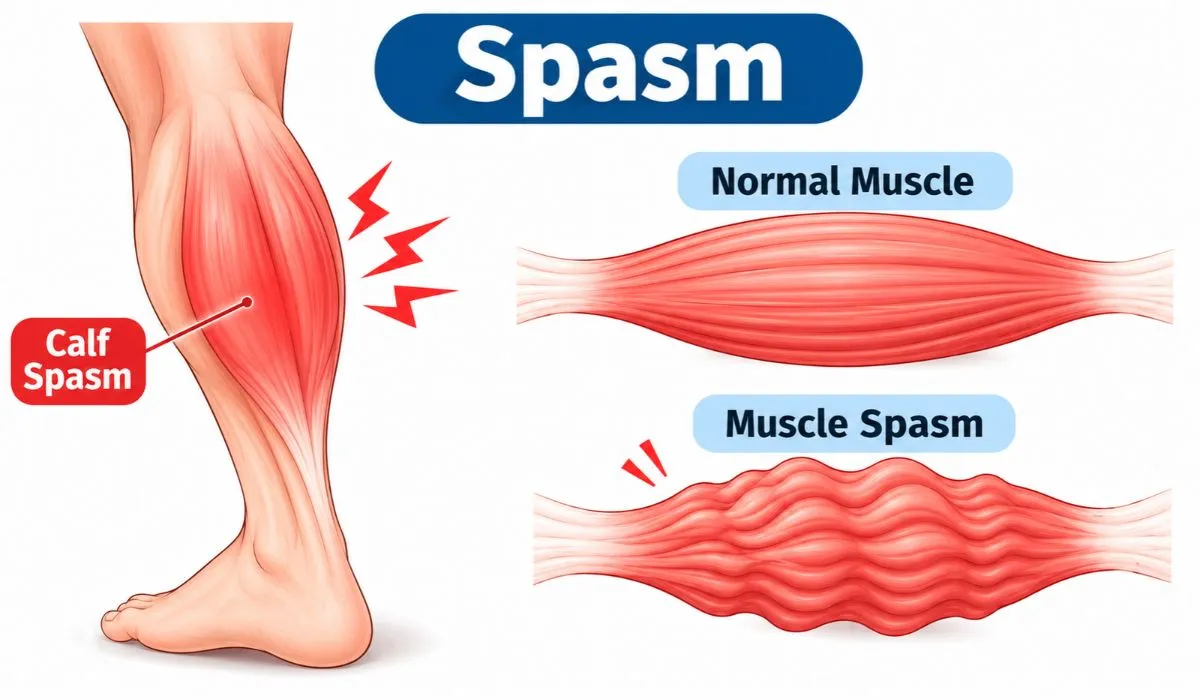
A spasm is a muscle that suddenly tightens and won’t let go. Doctors also call it a muscle cramp. It’s very common, usually harmless, and most of the time it eases with gentle stretching, a little massage, and some heat or cold.
Table of Contents
What Is a Spasm, Really?
If you’ve ever been jolted awake by a rock-hard calf, you already know the answer. A spasm happens when a muscle contracts on its own, forcefully, and then can’t relax. It might involve just part of a muscle, the whole thing, or a group of muscles working together.
They can strike almost anywhere. Calves, thighs, foot arches, hands, arms, back, neck, belly, and even the ribcage are all fair game. When a spasm hits the calf, people often call it a “charley horse.”
What Does a Spasm Feel Like?
That depends on the day. Sometimes it’s just a tiny flutter you can see twitching under your skin. Other times the pain is so sharp you have to stop whatever you’re doing and wait it out. The muscle may feel unusually hard, and it can even look a bit distorted.
Most spasms last anywhere from a few seconds to about 15 minutes, and some come back a few times before they settle down. After a rough one, the area can feel sore for a day or two.
Who Gets a Spasm?
Honestly, anyone. You can get one while walking, sitting at your desk, working out, or sleeping soundly. Some people are simply more prone to them. Athletes, infants, people over 65, and people with obesity tend to get them more often, and so do pregnant women.
If you’re expecting and your legs cramp at night, you’re in good company. Eating well during pregnancy, staying hydrated, and asking your provider whether your prenatal nutrition or pregnancy supplements cover what you need can all be worth a conversation.
Why Does a Spasm Happen?
Here’s the honest answer: experts aren’t completely sure why some people cramp more than others. What they do know is that a few usual suspects keep showing up. Skipping stretches, tired muscles, exercising in extreme heat, dehydration, stress, and too much high-intensity exercise can all play a part.
Minerals matter, too. Too much or too little potassium, magnesium, or calcium can make muscles act up, and low vitamin D may contribute as well. For cramps that hit at night, sitting for long stretches, overusing your muscles, or standing on hard floors can add to the problem.
How to Stop a Spasm Fast
There’s no pill that ends a spasm instantly, but a simple routine usually does the trick. First, stop whatever set it off. Then gently stretch the muscle and hold that stretch until it lets go. A little massage with your hands or a roller helps, and if it’s your leg, standing up and walking around often brings relief. Heat soothes tight, tense muscles, while cold works better on sore, tender ones.
Over-the-counter pain relievers like ibuprofen or acetaminophen may help too. If your spasms are severe or frequent, a provider may prescribe a muscle relaxant. These can cause drowsiness, dizziness, and nausea, so they usually aren’t a long-term answer.
Easy Ways to Prevent the Next Spasm
Prevention mostly comes down to small daily habits. Stretch regularly, especially the muscles that complain the most. Drink plenty of water, avoid exercising in extreme heat, and wear shoes that fit well. Building overall fitness and staying at a weight that’s healthy for you also lowers your risk.
For night cramps, stretch before bed and keep your sheets loose around your legs. If you sleep on your back, prop your feet with pillows so your toes point upward. If you sleep on your stomach, let your feet hang over the end of the bed.
When to See a Doctor
Most spasms are nothing to worry about. Still, check in with a healthcare provider if they’re unbearably painful, frequent, or long-lasting. The same goes for swelling, numbness, or skin changes in your leg, or cramps that keep waking you at night.
Head to the emergency room or call your local emergency number if you have unbearable pain, cramps all over your body, or spasms that began after touching a potentially poisonous substance.
Spasm FAQs
What is the fastest way to stop a spasm?
Gently stretch the muscle and hold it until it relaxes, then massage it. Heat or cold can ease the soreness afterward.
What deficiency causes muscle spasms?
Low calcium, potassium, magnesium, and vitamin D may contribute. Talk to your provider before taking supplements.
Is a muscle spasm serious?
Usually not. Frequent cramps along with weakness, numbness, or poor coordination should be checked.
Why do spasms happen at night?
Long periods of sitting, muscle overuse, hard floors, and poor posture can all contribute.
Are spasms more common in pregnancy?
Pregnant women are among the groups more likely to get them, so hydration and balanced nutrition matter.