
You just found out you’re pregnant. Maybe you cried, maybe you laughed, maybe you just sat there staring at the test for way longer than necessary. And somewhere in the middle of all that, a much smaller, much more practical thought creeps in: okay, but what am I supposed to eat now?
Here’s the honest, no-frills version: small meals, more often than usual, built around folic acid, iron, and protein. Skip the raw stuff, go easy on caffeine, and leave the wine for later. But if you’ve tried to “just eat healthy” while nauseous at 8am, you already know it’s not that simple. So let’s actually talk through it.
Why This Stretch Asks So Much of You
Nothing shows on the outside yet, but there’s a lot going on underneath. Your baby’s brain, spinal cord, heart, and major organs are all forming right now, this week, quietly, while you’re just trying to get through your commute without gagging at the smell of coffee. The placenta is being built too. That’s the real reason this trimester matters more than people give it credit for. The CDC has been direct about it: enough folic acid early on genuinely lowers the risk of neural tube defects, and it’s not something you can make up for later. And no, you don’t need to eat more yet, that whole “eating for two” thing is more of a cute phrase than actual advice, but you do need to be a little more intentional about what ends up on your fork.
What Actually Matters Nutrient-Wise
Forget spreadsheets. You just need a rough feel for what to lean on.
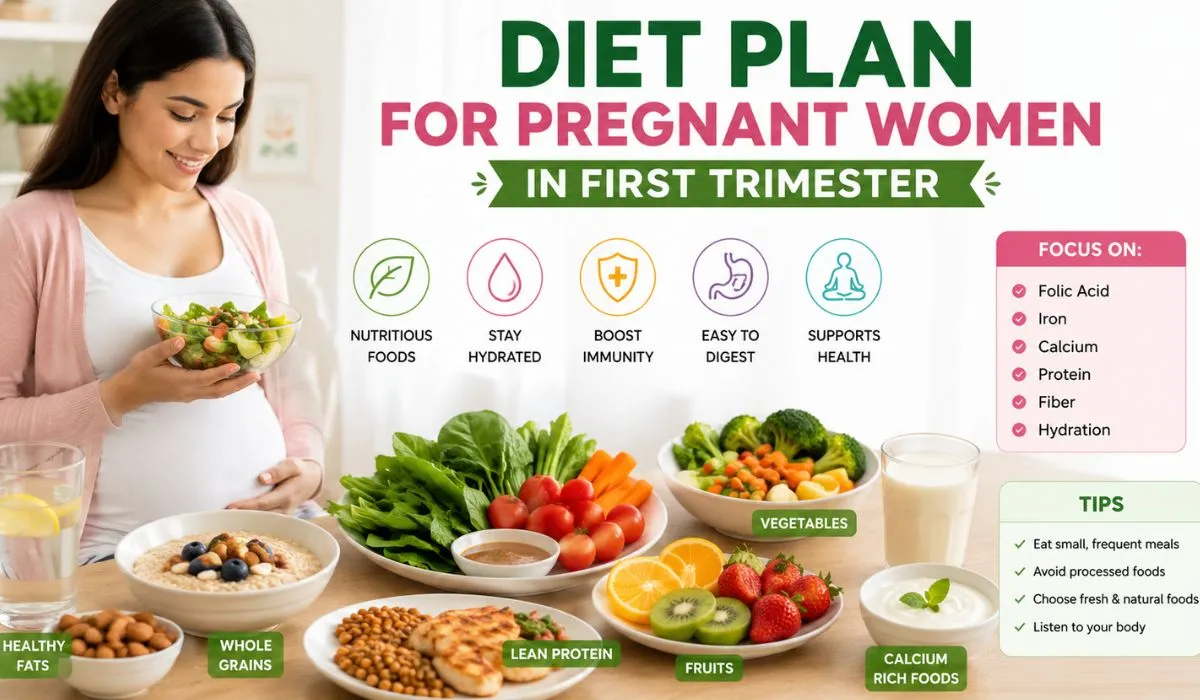
Folic acid comes up first, always, and for good reason. Leafy greens, lentils, oranges, fortified cereals, they all help, but most doctors will still hand you a supplement, usually 400 to 600 mcg, because let’s be real, getting there through food alone is a lot to ask. Iron’s quietly important too, since your blood volume is expanding whether you feel it or not. Lean meat, spinach, beans, pumpkin seeds, and if you pair them with a little vitamin C, some lemon, a few bell peppers, your body actually absorbs the iron instead of letting it slide right through. Protein, eggs, dairy, fish, tofu, chicken, whatever works for you, supports your baby’s tissue as it grows. DHA, that omega-3 in salmon and walnuts and most prenatal supplements, does real work for early brain development. And don’t sleep on calcium and vitamin D either, a glass of milk or a few minutes in the sun goes further than you’d think.
What a Day Might Realistically Look Like
Go easy on yourself in the mornings, they’re usually the worst part. Toast with peanut butter, or yogurt with a few berries, tends to go down easier than anything heavy. Mid-morning, a small handful of nuts or a piece of fruit can hold you over. Lunch is usually your best shot at something substantial, grilled chicken or lentils with rice and steamed vegetables, that kind of thing. When the afternoon slump hits, whole grain crackers with cheese or hummus with carrot sticks keep your energy from tanking. Dinner could be baked fish or beans with a salad and a small serving of whole grains, and if hunger sneaks back in before bed, warm milk or a banana is an easy, gentle way to close things out.
None of this needs to be followed to the letter. What matters is the shape underneath it, smaller meals, spaced out, protein and iron showing up more than once a day.
What to Just Leave Off the Plate
A short list, but a firm one. Raw or undercooked meat, fish, and eggs carry real risk of foodborne illness, and unpasteurized dairy or juice falls in the same bucket. High-mercury fish, swordfish, king mackerel, that kind of thing, are best skipped entirely. Alcohol has no known safe amount during pregnancy, so it’s just off the table, full stop. Caffeine doesn’t have to vanish, but most experts say stay under 200 mg a day, roughly one cup of coffee.
When Eating Feels Like a Job You Didn’t Sign Up For
If food is the last thing you want to deal with right now, you are absolutely not alone. This is one of the most common, and one of the most draining, parts of early pregnancy, and nobody warns you how physically exhausting nausea can be. A few things genuinely help: dry crackers by the bed, eaten before you even sit up, ginger tea sipped through the day, smaller portions more often instead of forcing three full meals, and just avoiding whatever smell happens to be your enemy this week. If you can’t keep anything down for more than a day or two, call your doctor. Really. You don’t have to push through this on your own.
Easy Mistakes That Sneak Up on Everyone
Skipping meals because nothing sounds good, treating your prenatal vitamin like it replaces actual food, cutting calories out of fear of gaining weight, forgetting to just drink water, these are the things that trip people up over and over. They don’t mean you’re doing this wrong. They just mean you’re human, in a trimester that doesn’t always make eating easy.
Questions You’re Probably Still Chewing On
Can I eat fruit freely right now?
Yes, and don’t second-guess it. Fresh, well-washed fruit is one of the easiest, safest things you can reach for, fiber and natural energy without much downside.
Is it normal to lose a little weight this early?
More common than you’d guess, especially with nausea in the picture, and usually nothing to worry about. Just mention it at your next appointment.
If I’m already eating well, do I still need a prenatal vitamin?
Most doctors will still say yes. Hitting 400 to 600 mcg of folic acid through food alone is genuinely hard this early, even if your diet’s solid.
Is coffee completely off the table now?
Not entirely. Under about 200 mg a day, roughly one 12-ounce cup, is generally considered fine.
What if vegetables are the last thing I can look at right now?
Totally normal. Blend them into a smoothie, hide them in a soup, or just cook them well instead of eating them raw. Your appetite for them usually comes back on its own by the second trimester.
 Emma Gill